

Jeffrey Goodman’s The Last Lullaby is one of those rare debut films that is so assured in its style that it becomes clearer and clearer as we watch the film unfold that we’re dealing with a major up and coming talent. So rare is it these days to find a thriller that is willing to slow things down – to exist in silence and push aside all the needless noise that clutters modern thrillers. Here is a film that understands the essentials of filmmaking, and why we go to see movies like this. The Last Lullaby is a classic noir existing in a 21st century film – it may not be the most original story (but what noir claims to be wholly original?), but it’s a breath of fresh air; it reminded me of Paul Thomas Anderson’s first film Hard Eight…not in plot, but in how good of a debut film The Last Lullaby is.
The film stars Tom Sizemore as a weary hitman who can’t sleep, and because of his insomnia stumbles upon an opportunity to make some money. Sizemore’s character is simply known as Price, and as he stumbles upon a failed kidnapping he decides to turn the tables and get the ransom for himself. This opening scene immediately shows Goodman’s skills as a director, not to mention the beautiful and subdued score by Ben Lovett (which throughout the film perfectly, and beautifully, conveys the contemplative mood Goodman is going for…think of it in a way you would the score to a Michael Mann film) and the great cinematography by Richard Rutkowski.
 After the opening scene we flash forward to find Price “retired”, but of course that is never the case with movies like this, and the events that lead Price to stumbling upon this money lead him further towards getting more and more involved with someone he is supposed to kill. This person is Sarah (Sash Alexander), a librarian in a small town. She’s obviously the key to some big case because the man who hires Price to kill her is, seemingly, a man of great power (I say seemingly because as is the case with these great neo-noirs people aren't who we think they are, and there's always some bigger reveal that helps bring the whole plot in focus). The problem is as Price follows Sarah around to get an idea of how he can kill her and make it look like an accident, he begins to become intrigued by her. At one point outside of a tavern he saves her from her abusive ex-boyfriend; and that’s his in, after that he’s in too deep and cannot bring himself to kill her. This leads to a scene where Sarah and Price share a quiet moment over preparing dinner, but when Sarah leaves the kitchen she is attacked…Price (who obviously hasn’t told her who he is yet) easily disposes of the intruder. It’s from that point that Price and Sarah are in it together, and now romantic interest has given way to protection as Price goes from being paid to kill her to finding out why these people want her dead, and subsequently protecting her and helping her extort more money from these people.
I’ll remain elusive about the plot because half the fun of these noirish thrillers is watching the intricate story unravel. The script by Peter Biegen and Max Allan Collins (who co-wrote Road to Perdition), adapted from Collins’ short story “A Matter of Principal”, doesn’t rely on the clichés of the thriller; rather, it has fun with the conventions and motifs of noir: the weary protagonist, characters who utter succinct phrases that ooze with machismo, the man who gets in too deep, moral ambiguity, seedy toughs, and a twisting plot that doesn’t reveal its full hand until the very end.
 What makes this particular noir so special is the way Goodman understands that it’s okay to stay on a shot for more than 10 seconds. In the aforementioned dinner scene some unsure directors would have Price and Sarah sleep together, the attack the catalyst for jumping in bed together; however, Goodman is too smart for that, and wisely just keeps the two characters in a medium two shot…and lets the moment wash over us…the quiet after the storm.
What I also enjoyed was the lack of voice over, another noir trope that works well sometimes (in a campy way), but is pleasantly absent from this film as the lack of narration allows the viewer soak in the quieter moments that are in the film. The moments of quiet and contemplation make The Last Lullaby one of the better thrillers I’ve seen in a long time because it’s evident that its filmmakers were more concerned about character and mood, than violence and a twisting plot that exists solely to throw the viewer off.
 The film is a highly effective small town neo-noir in the vein of Blood Simple, Red Rock West, and 2007’s The Lookout; there's even a quick visual nod to John Boorman's noir classic Point Blank (also the way everyone refers to Price by just his last name reminded me of the way people referred to Lee Marvin’s hitman, Carter). The performances are great across the board. Sash Alexander plays the female lead not as hapless damsel, but as a strong-willed woman who knows what she must do and feels morally obligated, despite threats against her life, to the right thing. Sizemore has always been one of my favorite character actors. He’s been more than memorable in his amped-up roles from True Romance to Natural Born Killers; but here he dials it down…a lot, and it’s great to see Sizemore going for something we haven’t seen from him before. His off camera exploits are well documented, and because he’s so good here we never once think of him as Tom Sizemore the character, but we see him simply as Price. There’s also a great, smarmy performance from veteran character actor Bill Smitrovich (it's a performance that is so pitch-perfect and right at home for this kind of movie) as the man who hires Price to kill Sarah.
 The look of the film is gorgeous as this isn’t your usual heavy-on-the-shaky-cam indie thriller. But what’s most impressive about The Last Lullaby is the way it holds back from the needless amenities. For example: there’s a great shootout scene that takes place in a field that is intelligent and intense because it relies on natural sound and setting, rather than guns blazing. It’s way more effective and intense than anything found in the countless in-the-moment action scenes from the Bourne films or things like The Transporter.
It’s films like this that get me excited about the fact there are still filmmakers out there who realize that, when making a noir/thriller, subdued and classical film techniques are always going to trump the in-the-moment action style found in most movies containing guns, gangsters, and shootouts. The violence in The Last Lullaby is shocking, not because it’s ultra violent, but because the loudness of gun bursts always breaks the comforts of silence. It's an amazing film that succeeds in evoking the countless good feelings and surprises found in smaller gangster films like In Bruges and the aforementioned The Lookout. On the back of the DVD box Goodman asks “can we make movies slower and quieter and still make them riveting?” He certainly can. This is one of the best surprises of 2009.
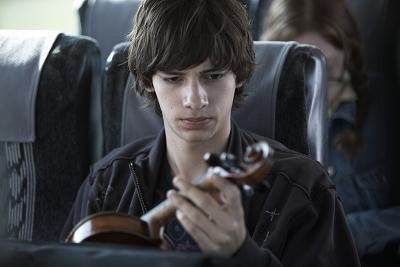
 Opening night I went and saw the film Once More with Feeling starring Chaz Palminteri and Linda Fiorentino. The film, directed by indie stalwart Jeff Lipski, is about a psychiatrist named Frank Gregorio(Palminteri) who once had a passion for singing. As he prepares to sing a song for his daughter’s wedding, his fire is rekindled and the only appropriate outlet is through a karaoke bar located in the local bowling alley. This creates problems with the family as they wish they had more of their father around – he sees it as his family not taking an interest in what he’s doing and what he’s passionate about, and thus it inevitably leads to a romantic interest with Fiorentino, a quiet lurker in the bowling alley bar who sees talent in Palminteri. There are hidden secrets and truths and something else lurking behind the intentions of Fiorentino, but nothing every overtly sexual; the film is too smart for that and doesn’t rely on Hollywood conventions. The film parallels the story of the father with a story about his daughter (the wonderful Drea de Matteo) who is also considering an affair with a local policeman. Lipsky’s film is touching and warm and had me smiling from beginning to end. There are moments that come from real life situational humor, moments that evoke genuine laughter – a kind of been there, done that tone to the punch line. The film also (wisely) sidesteps the siren song of sitcom humor or drama – there are no false moments of mistaken intentions, there are no wacky moments of sexual advances, and most importantly, the characters don’t act like their actions don’t have consequences. It’s irrelevant whether or not the main characters do or do not have affairs, but what is important is that Lipsky’s film actually shows them weighing the pros and cons of said affairs. Rarely do you get a film or a filmmaker that has the patience to show that. The only minus for the film was the way it was filmed; filmed in digital some of the film was a little murky and in some scenes I definitely noticed the digital photography more than the story, but those are nitpicks. Lipsky was in attendance for a Q and A afterwards and mentioned that filming on digital was something that he didn’t want to do, and it’s something he’ll never do again.
 After the seminar I had a few minutes to prepare for the one film I was most looking forward to, Atom Egoyan’s Adoration. This is a powerful film about the thin line between truth and reality and how we remember things. Like any good Egoyan film, Adoration begins in flashback and then works its way towards a conclusion via more flash backs, until finally the major epiphany happens and Egoyan unravels the final layer. I admit I am a huge fan of his films and probably an apologetic one at that, but this is a film of tremendous power that ranks right up there with Egoyan’s own masterpiece The Sweet Hereafter. I felt lucky to see the movie as we were informed before the film began that it probably won’t be released until July or August.
 Later that night I watched the Japanese film Kabei: Our Mother which is a deliberate and poignant WWII melodrama. There is a shot at the end of the film that shows post war Japan in a small rural village, it’s an unexpected punch to the gut as most of the film is quite tame aesthetically. This is your typical Japanese film, slow, methodical in its melodrama, and wonderfully acted. The director Yoji Yamada has apparently been around a long time as I researched him prior to seeing the film and found that this was the man’s 80th film (!). At certain points I felt the films length, but then to the films credit I was sucked right back in for another 45 or 50 minutes. A really nice film.
 The final film of the night was the real surprise, and I think ultimate winner, of the festival. Jeffery Goodman: The Last Lullaby. Tom Sizemore stars as a “retired” and weary hitman who can’t sleep, stumbles upon an opportunity to make some money which dominoes into events that get him more and more involved with someone he is supposed to kill. The film is a highly affective small town neo-noir in the vein of Blood Simple, Red Rock West, and 2007’s The Lookout. There's also a nice homage to John Boorman's noir classic Point Blank. Sizemore still has the chops to act, and the look of the film is gorgeous as we were treated to a pristine 35mm print made solely for the Salem Film Festival. The film doesn’t rely on the clichés of the thriller; rather, it has fun with the conventions and motifs of noir: the weary protagonist, the man who gets in too deep, ambiguity, etc. There’s a great shootout scene that is intelligent and relies on silence and smarts, rather than guns blazing. It’s films like this that get me excited about the fact there are still filmmakers out there who realize that, when making a film like this, subdued and classical film techniques are always going to trump the “in-the-moment” action style found in most movies containing shootouts. The violence in The Last Lullaby is shocking, not because it’s ultra violent, but because the loudness of gun bursts always breaks the comforts of silence. It's an amazing film that succeeds in existing in that kind of no man's land found in sorta-commerical, sorta-indie films like In Bruges and the aforementioned The Lookout.
 I wrapped my weekend by seeing a touching Chinese/American film called Children of Invention. The film was made before the market crashed and millions of people lost their jobs, but it has come at an appropriate time. The film concerns a mother who is trying to make ends meet after her husband has left her to go back to Hong Kong. Elaine Chang and her two young kids live just outside of Boston in an abandon new construction condo (the owner is out of town for five months, so their friend allows them to stay there). Elaine is constantly looking for the next “get rich quick” idea as she spends most of her day replying to ads in the newspaper. Eventually she is conned into a pyramid scheme and the bad goes to worse as events unfold that leave her kids vying for themselves. There are moments of real joy that are cut with moments of intense anxiety as Elaine struggles to figure out how she will get food on the table. The title comes into play at the end, something I dare not spoil, but I will say this: when the kids’ moment of reverie is interrupted by the harsh realities of the world they have to live it, well, it was one of the most poignant moments of any film I saw at the festival. The film is doubly remarkable by the fact that the two young young actors carry the film, and kudos to writer/director Tze Chun for not making the kids sugary-sweet and going the conventional route where the audience’s emotions are manipulated; which is usually the case with films concerning small children.


