Your Ad Here
Showing posts with label The Descent. Show all posts

Tuesday, May 4, 2010

The Descent: Part 2


Elegiac and poignant are not adjectives one expects to read in a review for a horror film, but the sequel to Neil Marshall's brilliant 2005 horror film The Descent does something interesting in playing off the events of the first film in order to evoke these emotions. Sure the film is a fun, often flawed Friday-night horror flick, but it's also trying to be something more than that – and even though there's not quite the same amount of character development as the original to give weight to the peril and mayhem the characters go through – for a 90 minute sequel director Jon Harris should be given some credit for almost making the film a success. There are pay-offs in the film that don't work, repetitive set pieces, and an ending that is atrociously bad; however, warts and all, The Descent: Part 2 is still a visceral experience that outdoes anything we've seen from the genre since Marshall's original film, and it even slows down for a few moments so that the story can compound on the sadness from the first film, all culminating in making this sequel a better horror experience than its straight-to-DVD American release would suggest.


The film picks up where the first one ended (well kind of, this film asks us to disregard the ambiguity and sadness of the first film's final moments) with Sarah (Shauna McDonald reprising her role) showing up on the roadside in the Appalachian Mountains and kick-starting a search and rescue mission to find her missing friends. There's your plot, your entry point into what is essentially a rehash of the first film with a few intriguing ideas that never get fleshed out. The idea for a sequel as first seemed asinine to me, but what Harris does with the film is interesting enough – especially when considering the possibilities of a police investigation of what happened, briefly taking the film out of the context of horror – but it never builds on that interesting premise and instead jumps head first into your typical horror film where a search and rescue group and Sarah head back into the cave to find her friends. Okay, but what about the set-up? We know that bad things will happen to these people when they get down there, so why should I care about them dying? What are their relationships to one another?

These kinds of questions get tossed aside in the name of rehashing all of the same weird-things-happen-in-the-cave type stuff from the first one, but they happen without the weight of actually caring about the characters. When the characters are in peril, or need to be left behind because they're trapped in some rocks, or lose their way from the group, the film slows down within the moment to give us the touching musical score (from the first film, which was quite good) and remind us that we should feel sad right now, but something feels amiss since we don't quite have the background we need to care about these characters.


Another interesting idea the film only kind of broaches is whether or not Sarah is insane after her experience. When the group first gets down in the cave Sarah is silent (for obvious reasons since the "crawlers" hunt on sound) and takes on some of the physical characteristics of the "crawlers" (the first death scene is a doozy) . Was it all in her head? Did she in fact think that the calcium deposits in the cave where the "crawlers"? Again, all kind-of interesting questions that are never fully explicated in the film because it's more interested in being a visceral entertainment, instead of trying to be both like the first film.

Aesthetically the film is repetitive and therefore not very interesting to look at (even though it's not bad to look at except for the oft phony looking cave set) and lacks the innovative and interesting horror allusions Marshall littered his original film with. However, there are some intriguing moments in the film like when two members of the rescue party scale the cave by leaning back-to-back so that the "crawlers" don't get them, and as they get out through a crevice they happen upon one of the previous spelunkers who tried to get across from one side to the other (this leads to an inspired fight scene). There's also a moment when the search and rescue team happen upon one of the previous film's most nightmarish locations and find the video camera that Sarah used. As they watch the footage of the dead girls before getting to the footage shot in the cave the viewer is reminded of the Picnic at Hanging Rock poignancy set up in the original film where you have these beautiful women who – to the outside world – have disappeared mysteriously. The scene is shot in a way – with Sarah, who has run off from the search and rescue party, slouching behind a rock listening to the voices of her dead friends ring out from the camera – that reminds the viewer of why the first film worked so damn well at evoking more than just fear and dread and horror. This moment of the film is what causes me to open this review with words like poignant and elegiac because as we go back into the cave with Sarah we can't help but be reminded of the loss of her friends.

There is, however, one plot development that fans of the first film will no doubt roll their eyes at (SPOILER) and almost brings the last part of the movie to a screeching halt: Juno is still alive. Yes, the woman Sarah left for dead and we too assumed was done for as she was surrounded by "crawlers" helps save the day in the sequel. I can imagine if fans of the original gathered to watch this in a theater there would be a collective "ugh" in the crowd. Harris does a good enough job of showing Juno to be more like a "crawler" than human when we first see her, but again…I want to know what this suggests: how did she survive? Is she a cannibal now? Is she sane? What does her survival suggest about Sarah? Again, Harris abandons these more intriguing plot threads in order to keep the brusque pace of the film going, and I can't help but think that this film could have been so much more than just a sequel.


Despite these disappointments with the story, and a final bit of punctuation that is all kinds of stupid (and doesn't befit the mood the original established), The Descent: Part 2 is as good a horror film that's been released since the original. That's more of a damning claim on the genre as a whole than the film, but nevertheless it's worth checking out for its visceral appeal and its gushy, squishy gore effects and extreme violence – which by the way director Harris definitely was a Fulci fan as we get a drill through the head a la City of the Living Dead and a pick-ax through the mouth a la The House by the Cemetery – and intriguing enough story threads to keep fans of the original happy enough during the film's economic running time. The acting and the character development aren't nearly as good as the original, but I don't think Harris was interested in making a sequel that aspired to be more than what we get (he certainly isn't trying to recapture the magic of Marshall's film), and for that I can't hate on this sequel too much. Fans of the film should see it, though, as I was pleasantly surprised that despite erasing all of the ambiguity of the first film, The Descent: Part 2 didn't frustrate the hell out of me.

Thursday, January 7, 2010

My 20 Favorite Things of the Decade


Instead of doing a traditional countdown of the best films of the decade (for that you can see the Question of the Day feature that was posted in the last week or so) I thought I would change it up and just list some of the things that made me extremely happy the past 10 years. I think people may be a bit "listed" out right now, and I like doing something more personal than just listing movies I loved…which is an exercise I take pleasure in, but for that just look at my top 10 lists for the past 10 years (check the labels on the left side of the blog). So here are my 20 favorite things (movies, sports moments, music, books, etc.) of the past 10 years…


20) The Return of Horror 

Neil Marshall's The Descent was a return to horror movies with a brain. Sure, the film was visceral and relied on some good old fashioned monsters and jump scares, but the first half of the film is a Don't Look Now type of cerebral horror film where we feel the dread and uncertainty that the main protagonist feels. It's rare for a horror film to get me this excited, but Marshall's film was the first since Craven's New Nightmare to evoke what makes the horror genre my favorite. There were other great examples of the genre this decade: The Devil's Backbone, Bug, The Orphanage, and this years fantastically goofy and fun and altogether brilliant Drag Me to Hell. For all of the drek and bile that the genre produced this decade (Hostel, Saw, multiple remakes of classics like The Texas Chainsaw Massacre, Halloween, and Black Christmas) it's amazing that the horror film came out relatively unscathed and intact (unlike the post-slasher era in the 90's). I guess the genre is need of another jumpstart, but I am just glad that even some of the mediocre horror films like The Strangers are showing promise. It'll be interesting to see what happens in the next ten years as the economy can assure us of two things: that there will be sequels and remakes because they guarantee money (I'm actually kind of curious about the re-launch of A Nightmare on Elm Street), and that there will be some innovative horror films because they can be made on the cheap and studios like taking chances on them because they reward is usually quite high when you gamble on a horror film (Paranormal Activity).


19) "The Simpson's" DVD Commentary

One of the great things about DVD's is that they provide filmmakers or the creators of a television show to comment on their work. Often this leads to insightful commentaries where the filmmakers will point something out that you never noticed before. Ah, but this is "The Simpson's" and their DVD commentaries are an irreverent delight. A lot of the commentaries consist of creator Matt Groening; directors extraordinaire David Silverman, Mark Kirkland, Brad Bird, and Jim Reardon; show-runners Al Jean, Mike Reiss, David Mirkin, and Mike Scully; and special guests like Dan Castellaneta (Homer), Julie Kavner (Marge), Nancy Cartwright (Bart), and Yeardley Smith (Lisa), Hank Azaria (various voices); and special guest stars like Jon Livitz, John Waters, Jeff Goldblum, Conan O' Brien, and more. Whew. These commentaries are hilarious, insightful, and on Seasons 3 – 6 (the Al Jean/Mike Reiss and David Mirkin years) just a joy to watch. Why? Because the makers are usually re-watching the show for the first time since they created it, and a lot of the episode is them just reliving fond memories or watching the episode and laughing at their own work. When you've seen all the classic episodes and know all the beats, it's actually a lot of fun to watch the commentaries. And for nerds like me we can never get enough inside information about the show. Some of the best commentaries (because of how they make fun of people like me for listening to the commentaries) are the Mike Scully ones. Scully is often accused (wrongly I might add) of ruining the show for turning it into a (gasp) cartoon. The truth is his seasons (parts of 8, 9-12, and parts of 13) are some of the series most underrated. Some of the more boring commentaries are by beloved show-runners Bill Oakley and Josh Weinstein (Seasons 6-7 and parts of 8). I actually tend to think those seasons are some of the more overrated ones. For "Simpson's" nerds such as me these DVD commentaries are a cornucopia of useless knowledge and I'll continually plop down 30 bucks to buy these DVD sets for the commentaries alone. Check out the commentary tracks on the two most controversial episodes amongst the staff: "The Principal and the Pauper" and "A Star is Burns"…great stuff.


18) "King" Felix Hernandez

The pitching phenom for the Seattle Mariners is a must-see attraction every time he takes the mound. Even when the M's were unbearable to watch the last couple of years, every 5 days there was a reason to have hope as an M's fan. He's a superstar. And with him and Ichiro (the most exciting player in baseball) on the same team and playing at a high level, there's always a reason to watch…even during the Bavasi years (shudder). All hail the king.


17) The Blood Brothers  

The Seattle post-everything group was something to behold in the 00's. Every album was different and every album pushed what we hardcore fans understood the genre to be. Their brilliant Burn Piano Island, Burn was the jumping off point for what would be a career that didn't overstay its welcome. As the band grew (Crimes was fantastically accomplished album when held up against Burn Piano Island, Burn) so did their listeners (in both age and tastes), and they understood that. Calling it quits in 2007 the band left us with their most brilliant album Young Machetes. If you were ever curious what the Beach Boys may have sounded like were they hardcore band living in Seattle then you may want to check out the standout track "Huge Gold AK-47". I would also recommend you check out "Trash Flavored Trash", "Love Rhymes with a Hideous Car Wreck", and the brilliant "Giant Swan". One of the great bands to come out of the new-Seattle movement that lasted from about 1998-2007.


15) The West Wing  

Aaron Sorkin's groundbreaking drama was something to behold for its first four seasons…then the wheels fell off for Sorkin (both in his relationships with the studio and his life). What started out as a show with writing comparable to Mamet turned into an "E.R. in Washington" type show in its fifth and sixth season (John Welles, Mr. E.R. himself, took over producing duties) as characters began bickering about idiotic clichés instead of seriously and intelligently discussing the issues. Oh, and there were also lots of interoffice relationships under Welles. Those two seasons aside, the show really picked back up at the end with the additions of Alan Alda and Jimmy Smits as opposing candidates looking to become the next president. The show is one of those classical dramas were each viewer identifies with a different character. Martin Sheen was just about perfect for Sorkin's idealized version of the president, Jed Bartlet (he did the same thing in his film The American President with Michael Douglas) and Bradley Whitford was even better as the snarky, better-than-everyone-else Asst. Chief of Staff. The late John Spencer was warm and endearing as Leo, the Chief of Staff and resident father figure, and more often than any other actor on the show Allison Janney stole scene after scene as the Press Secretary. However, my favorite character was far and away Toby, the incredibly intelligent and often dour speech writer played to perfection by Richard Schiff. I think Sorkin must have loved this characters the most, too, because he often gave Toby the biggest ethical dilemmas to dissect. Just a great character on what was easily the best network show of the decade.


14) Jeanette Winterson Novels

One of my favorite authors had a pretty great decade. Still trying to match the brilliant of her highly influential postmodern love story The Passion, Winterson went back to the well with The Powerbook…an amazing novel about the digital community and its links to storytelling and all the positives and negatives that come with it. Winterson also had interesting forays into children literature and science fiction (2007's The Stone Gods, a stunningly good novel for the its first half), and in between was another attempt at historical/mythological love story in the entertaining but heavily flawed Lighthousekeeping. Still, The Powerbook is one of the must-read novels of the 00's, and even when Winterson fails she's still more interesting than a good portion of people publishing books.


13) The Seattle Mariners Tie All Time Wins Mark with 116

I remember at the time thinking that surely this Ichiro player couldn't make that big of a difference…that, and seemingly having the stars aligned, made for what is the greatest season ever for Mariner fans. Sadly, no one really talks about it outside of the Northwest because the M's did their typical postseason nosedive (DAVID FREAKING JUSTICE!).


12) RiffTrax

I love the snark, and it elated me to no end to know that the guys that did "MST3K" decided to continue doing delivering their snide comments while watching movies. Sure Mike Nelson's show created a generation of nerdy, smart-ass moviegoers…but for those of us who love the whole so-bad-it's-good angle it was a match made in heaven. Other "MST3K" members (the original cast that is) released more traditional "MST3K" fare with "Cinematic Titanic" where they riff on older B-movies instead of the modern releases that Mike and co. riff on with "RiffTrax". I could also throw in "Cheap Seats" here as the Sklar Brothers are indebted to Mike Nelson and company. Their show used the same method of making snarky comments, but this time watching obscure sporting events that ESPN used to air. Put altogether and it was great to have a decade where I didn't have to worry about not having "MST3K"-like shows around. The best "RiffTrax" would have to be The Wicker Man.


11) At Least One Film by Terrence Malick

That film would be The New World, and boy is it a good one. This just made me glad I didn't have to wait 20 years like fans had to for The Thin Red Line.


10) David Milch

"Deadwood" may be the show of the decade (sorry "The Soprano's"), but everyone has talked about that show and highly innovative, entertaining, and richly layered the vulgar and bloody western was. I'd prefer to talk about Milch's follow-up "John from Cincinnati", a show that was just as layered as "Deadwood" but dismissed far too quickly. The show about a deadbeat surfer, his family, his prodigy of a son, and a mysterious figure named John all inhabit a small California surfing community. There's a lot going on here for one season, and even though the odd language and the mystical elements of the show scared off a lot of viewers the show definitely deserves to be re-examined under a less hyped lens (really all people wanted out of Milch was another "Deadwood"…they got it, just not in the way they envisioned). I'll be re-examining the show on the blog in the next month or so. Truly one of the most underrated pieces of entertainment this decade.


9) Rick Bass

Probably the best writer of his kind since Thoreau or Thomas Merton. His deeply contemplative, socially conscious, naturalistic short stories are some of the best writing I've had the privilege of coming across this decade. His short story "The Hermit's Story" is one of the best I've read, rivaling Faulkner's "The Bear" as one of the deepest short stories about man and their relationship to nature, and how that relationship can tell us a lot about each other and ourselves that we weren't aware of. Go read it now…he's an amazing talent with the voice and sense of urgency of an activist without being too pushy or showy about it.


8) Michael Mann

No other filmmaker (except for Tarantino, but more on him later) gave me more to love about the movies this decade. From the underrated Ali to the even more underrated (and freaking fantastic) Miami Vice; Mann has tweaked and evolved his aesthetic, cementing his status as the king of digital filmmaking. His 2009 gangster film Public Enemies is one of the perfect films of his oeuvre, and a clear reason why he remains, along with Terrence Malick, the visual poet of American cinema. Probably my favorite Mann moment this decade is the "coyote scene" from Collateral. There's a lot going on in that one, dialogue-less moment, and it elevates a rather ordinary moment between a hitman and the reluctant accomplice into an artistic stratosphere not normally associated with action movies.


7) Portugal. The Man

This Alaskan rock band created one of the great post-hardcore albums of the decade…and that was on their first try. As they evolved their sound they started becoming a weird postmodern jazz/funk/blues/whatever band that was willing to play outside of their comfort zone and create memorable rock music. Their sophomore album Church Mouth is a hooky album that is unrelenting without being overbearing…it's 15 tracks of awesomeness. However, their 2007 effort Censored Colors, is one of the special albums that you feel fortunate to come across. It's a smooth, intertwined album where each song bleeds into the next. It's not a concept album, that would almost be too easy for this band, but an album by a band that understands how to evoke a specific mood by meshing all of their sounds together. This isn't a band that's worried about compiling an album full of singles; they want you to listen to the entire album because that's the only way you can truly appreciate how each song makes the other work. By the end you're completely unaware of the fact that the final five songs just passed you by. It places you in a state of reverie that few albums can, and it's probably one of my five favorite of the decade. Their follow-up The Satanic Satanist, just a year later (this band puts out an enormous amount of material, which makes it even more amazing that they continue to impress with their albums), feels more like a B-sides to Censored Colors, but it's impressive no doubt.


6) Ian McEwan

If there's an author who had a better run this decade – Atonement, Saturday, and On Chesil Beach – I'd like for you to point them out. All three, especially Saturday, are brilliant novels. If you haven't read McEwan don't be dissuaded by the accolades and the aesthetes who praise his work; his writing is both easy to understand and richly layered. That's what makes him such an amazing author: his ability to evoke a classical aesthetic while always sprinkling in postmodern elements into his story.


5) Football Coaches and their Rants

Oh boy. I just love post game rants that make coaches looks like out-of-control asses, instead of the composed leaders they are supposed to be. So many to think of here…click on the links to watch some good videos.

"They are who we thought they were…and we let 'em off the hook!" That gem by Denny Green, then coach of the Arizona Cardinals, might be my favorite of the decade.
 
How about Dan Hawkins reminding his players' parents that it's "DIVISION ONE FOOTBALL! IT'S THE BIG 12. THIS AINT INTRAMURALS…go play intramurals brother."

How about the now infamous "I'm a man…I'm 40!" nonsense.

Or how about the University of Michigan women's basketball coach…that one is gold.

Thanks to all the coaches out there for making it a memorable decade for postgame watchers like myself.


4) Gatsby's American Dream

Just scroll up and re-read what I wrote for Portugal. The Man and add a few more genre tweaks to their music style and you have a sense of how I feel about this innovative band from Seattle. They created the decade's most hilarious album – a self-titled effort that lampoons the record industry and all the young, image-before-music bands that make millions while hard working bands get the shaft – rich with literary allusions and insider jargon…it doesn't hurt that it's also the catchiest record of the decade. Another band, like Portugal. The Man, that loved to mess with their rhythms and timing, striving to create something that the listener had never heard before but all the while sounding familiar enough as to not scare uninitiated listeners away. It was a delicate balance, and Gatsby's American Dream walked the tightrope successfully. For the attentive listener you'll be able to hear variations of earlier songs off of Ribbons and Sugar and Volcano, their second and third albums, throughout their self-titled effort. It's an amazing bit of self-reflexive mash-up, and they pull it off with tremendous success. Download the track "We'll Remember it for You Wholesale" off of Gatsby's American Dream. Sadly the band disbanded in 2007, but there's always hope they'll be back. Most of the members have formed the pretty-good Kay Kay and His Weathered Underground.


3) Four Moments from Quentin Tarantino

Like the aforementioned singled out directors on this list, Tarantino never fails to surpass my unsure expectations. After the long hiatus between Jackie Brown and Kill Bill there were a lot of rumors floating around about his next picture, Inglourious Basterds. However, he decided to re-work an idea that Uma Thurman had brought to him, and thus is the very abridged origin of Kill Bill. But I don't want to spend time talking about his great movies of the decade (and all of them were great)…I want to talk about four specific moments that showcase QT's talents.


Two come from Kill Bill and the other two from his 2009 masterpiece Inglourious Basterds. The first two I'm thinking of can both be found in Vol. 2. The Bride has been buried alive and must find a way out of her coffin…flashback to her meeting her mentor. Not only is this a great homage to classic kung-fu movies, but it also fleshes out the characters a little bit more in what has been, up to that point, strictly a revenge action picture. Tarantino slows things down in during this flashback, and we begin to see what made The Bride such a bad ass assassin. This little vignette is so absorbing that we forget we're in flashback until we cut back to Thurman in the coffin and she begins to punch her way out of the box. The image of her climbing through the dirt is one of the best of the film. The second moment is the amazing end to the film. Bill and The Bride's conversation (especially the moment where he talks about superheroes) is one of the best bits of dialogue Tarantino has written. The end is campy fun, but also poignant as Tarantino gives The Bride her happy ending: a bird's eye shot of The Bride curled up on the floor hugging a stuffed animal and weeping with joy. It's one of the only times Tarantino has elicited such poignancy.


The other two moment, from IB, are similar…one is a moment of dialogue like the end of Kill Bill, only here it comes at the beginning of the film – a 24 minute dialogue between two people that rivets the viewer and sucks us into the story – and is aided by the beyond brilliant performance of Christoph Waltz. The other moment is probably the most popular of the film: the tavern scene. No scene this year – or perhaps this decade – has exhilarated me more. It's a scene that makes me smile for its entire manic and taut 30+ minutes. You may think manic is a weird word to describe a scene where a bunch of people play a guessing game in a tavern, but if you've seen the movie then you know why that's an apt word. The scene is as tense as it gets building and building and building some more until you're at your breaking point. After all the build up the pay off is a brilliantly brusque bloodbath (alliteration!). It's the perfect example of Hitchcock's quote: "Always make the audience suffer as much as possible." When you watch the scene and begin to understand the subtext of the game they play, only then does it begin to move beyond the visceral. It's one of those scenes that define an era of film.


2) New York Times Crosswords

After watching the documentary Wordplay I was hooked. I began doing easy crossword books from NYT (Monday and Tuesday puzzles) and just blitzed through them. After about a year of getting acclimated to crosswordese and learning that a Google search here and there isn't necessarily cheating, I decided to up the difficulty a bit. I've just now started doing medium puzzles (Wednesday and Thursday) with some amount of regularity, but even those are getting hard as you have to re-learn a lot of vocab and how they take normal Monday and Tuesday clues and simply make them harder to decode. I absolutely cannot do a Friday or Saturday puzzle. But I love Sunday puzzles. They're actually not the most difficult (that would be Saturday), rather they're a mixture of Wednesday – Friday clues, making solving a Sunday puzzle a fun experience on a lazy Sunday afternoon. I finally began timing myself during the summer and was able to solve a Monday puzzle in under five minutes. My goal is to be able to do a Monday puzzle in less than three minutes. I have a lot of work to do.


1) (Non-Movie Answer) The Oregon Ducks in the Rose Bowl
(Movie-Related Answer) The Year 2007 in Film

What a year it was for my beloved Oregon football team. No one thought they would win the Pac-10 by two games and make their way to the Rose Bowl. The big bowl game didn't quite turn out the way we were hoping (they ran into a highly motivated Ohio St. buzz saw of a defense) but how can any Oregon fan complain about how this season unfolded. It's certainly the most memorable of my life…yes, even more memorable than the 2001 Fiesta Bowl. It may sound weird to remember more fondly a year where your team lost its final bowl game (in 2001 Oregon crushed Colorado to finish the season #2 in the country), but there was just something about this team that made you love them more than any other Oregon team. Almost all of them return next year (they only lose five or six seniors)…so here's to hoping that I'll have another reason to place them atop a list in 2019.

Arguably the best year since a handful of years from the 70's (although 1999 gives 2007 a good run for its money) it was a year that contained some of the most memorable films of the decade: There Will Be Blood, No Country for Old Men, Eastern Promises, and Zodiac. It also contained a multitude of quality pictures: Michael Clayton, Breach, The Orphanage, The Lookout, Gone Baby Gone, Bug, Knocked Up, Into Great Silence, Atonement, Juno, Inland Empire, The Simpson's Movie, Talk to Me, The Hoax, Into the Wild, I'm Not There, No End in Sight, Ratatouille, Superbad, 3:10 to Yuma, and The Darjeeling Limited. Whew. That list speaks for itself (am I forgetting anything?)…what a year.

Wednesday, June 24, 2009

What the bloody hell?

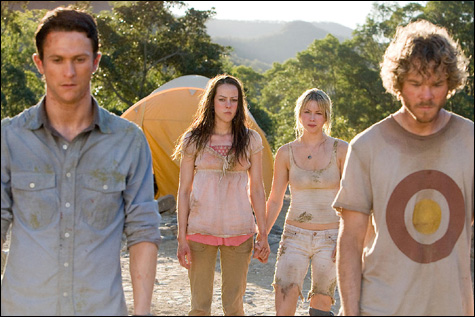
Me too Shauna...me too.

No...this isn't a rant against the Academy Awards expanding from five nominations for best picture to ten. No, I figured I'd take this opportunity to rant about something else that may be news to some, but came as a surprise to me. In my usual random web searching I decided to see when The Descent, one of the best horror films ever made, was released, and to my shock and horror I found that there is a sequel set to be released in September. The above still is one of a handful of images that has been released in promotion for the new film. Ugh, I feel like screaming, too. Complaints after the jump...

Okay...did the filmmakers think that fans of the movie didn't see the original British version of the movie on DVD? A version, although ambiguous, made a great case for the fact that Sarah didn't make it out alive (The U.S. version ends with her "escape" whereas the U.K. version cuts back to reality and Sarah in the cave with no exit in sight). Also, on the IMDB page they show that the character of Juno is once again in the film. In case you forgot she was left to be eaten by the "crawlers"...so does this suggest then that the whole thing was in her head, that the allusion to the idea that the caves can play tricks on you is actually what happened? But then how do they explain the fact that they are bringing the "crawlers" back in the sequel, and supposedly they have evolved further and can fly now. Double ugh.

Neil Marshall's name is nowhere near this film, and I'm wondering why Shauna MacDonald agreed to do the film again. This will be a disaster if they just do a straight horror. And based on the plot synopsis, and the early images that were released, the film looks like it's just going to be a rehash of the first film: Sarah is rescued, she goes to a hospital, goes back down in the cave to save her friends who are apparently still alive. Again, this all suggests that the "crawlers" were indeed figments of their imaginations (especially Sarah who is a grieving mother and widow, and hints at the fact, early on in the film, that she may not be ready to move on with her life), but if that is the case, and the sequel is primarily psychological horror, then why the need to bring back the "crawlers"? And why make them so visible? They were more or less shadow creatures in the first film, and they came into the plot at a point where the characters would most likely have started hallucinating. The best part of the original is the reading that they all killed each other and imagined the "crawlers". The idea of a sequel with the same characters and the same scenario makes no sense.

I guess one could chalk this up to flattery through imitation, but man this is going to be rough to sit through with an open mind...because yes, I will see it, just like I do with any horror film or any sequel to a film I love. However, this has "bad idea" written all over it. The logic seems all over the place here as they seem to be disregarding any kind of psychological aspect that was clearly at the forefront of Marshall's film; and the fact that they're asking the audience to disregard the darker, nihilistic ending of the original is already putting the sequel in a pretty big hole. The power and poignancy of that final image of Sarah looking at her daughter, then as the camera pulls back they show Sarah looking at nothing (suggesting everything was in her head), is neutered now because of this unnecessary sequel.

And it's not like I'm anti-sequel, I just don't understand the logic in making a sequel to a movie where they totally disregard the elements of narrative that made the original so creepy. Perhaps this will be like what Aliens was to Alien, a pedal-to-the-floor action/horror hybrid that was all kinds of entertaining goodness...who knows, but it'll have to be pretty damn intense and impressive to make me forget about the fact that they're pretty much disregarding the end of the original film.

I don't know...maybe I'm too much of a fan of the original to think anything good can come out of the sequel, but it just seems altogether superfluous. Oh well...I guess more thoughts on this in September. This makes me want to find an old essay I wrote in college (published no less!) about the state of horror films...I guess we horror fans, and fans of the original film, play the waiting game.

Thursday, April 9, 2009

Ruining the "Ruins"


If every film that were adapted from a book was to be viewed directly after reading the source material, then each one of those films would be doomed for failure. It’s inevitable that the reader has created a better film in their mind; storyboards that no doubt clash with the filmmaker’s vision of how that source material should not only look on screen, but be transferred to the medium of film. I’m sure that Carter Smith’s The Ruins, when isolated from its source material, is an adequate enough horror film; however, I cannot separate it from its source material because I happened to read the book written by Scott B. Smith (no relation to the director) in one sitting – then I watched the movie. Maybe I was too ambitious in thinking that I could go straight from reading the book to watching the movie, and perhaps I should have allowed myself a buffer zone; but I was eager to see the visualization of Smith’s fantastic horror novel.

It’s inevitable, too, that the reader will always nitpick the small changes that are found in book to screen adaptations. These tweaks are necessary sometimes, because setting something up in film (especially in a 90 minute horror film) is a lot harder than using the first 100 pages of a novel – so I don’t fault Smith’s film too much for messing with the story and abandoning all remnants of character development, but what does seem odd is Smith’s penchant for dropping characters and changing the situations that happen to specific characters so that they can fit into a more conventional (and profitable) horror prototype.

Smith’s novel is about two vacationing college couples (Jeff and Amy and Eric and Stacey) who meet a German named Mathias in Cancun, Mexico. They engage in small talk, and Amy even kisses Mathias in a drunken haze. They become chummy and then Mathias tells them about his brother who left with an archeologist to an ancient Mayan ruin. They run off to find him and in the process meet a Greek who doesn’t speak English; they take him with them as he leaves a note with a map to the ruin on it for his other two Greek friends who are sleeping one off.
Naturally they come across many ominous signs that should be taken as a warning, and Amy is the only one in the group to recognize them, she’s hung-over and not in the mood for a hike, so her boyfriend Jeff, thinks she just isn’t feeling good because of that. Jeff is a bossy guy, a med school attendee, he is the self-proclaimed leader of the group; he insists that they continue despite the bad feeling Amy.

Once on the ruins bad things happen as they become prisoners on top of the dig site because for some reason the local Mayan’s won’t let them leave the site. And their afternoon hike becomes a multiple day struggle for survival as they battle hunger, thirst, broken bones, and some scary ass vines. The rest of the story I dare not give away, because that is the joy and the exhilaration found in Smith’s horror novel; a novel worthy of being compared to something Stephen King would write. Smith’s novel does an amazing job of building and compounding banal scene after banal scene where the reader really does feel tired and sun-burnt and hungry and exhausted.

Smith writes the novel as one long sequence – there are no chapters in The Ruins and reading the novel is like having your entire body in a vise grip, you go from one scene to the next at a breathless pace; the characters don’t get any breaks for rest and neither does the reader.

I rarely read horror novels anymore, as most of the stuff I read I guess could be construed as ‘arty’ or ‘heavy’ books, but I wanted to give this one a shot because I loved Smith’s previous (and only other) novel A Simple Plan. I read Smith’s story in one sitting, and that’s not to say that the novel is comparatively lesser than the aforementioned types of novels I read, it actually means that the novel was extremely entertaining and utterly hypnotic. I zipped through it because I was like a madman wanting to see the novel to its end. The ending of the novel is something I knew the filmmakers wouldn’t have the conviction to keep intact, but I held out hope that Carter Smith’s version of the novel (scripted by the writer of the novel Scott Smith) would at least be serviceable in bringing to the screen a horror story that reminded me of the claustrophobic, everything-gone-wrong type of horror stories found in modern films like Bug, Deep Water, and The Descent.

The film version of Smith’s novel is a mess – and again I freely admit that I probably shouldn’t have viewed it directly after reading the novel – a herky-jerky gore fest that is not at all interested in the banal, slow build of dread that made the novel such an intense and horrifying read. Smith the novelist shows with his two novels that he is interested in this banal evil (especially in A Simple Plan which was made into a superb film by Sam Raimi) and how it plays with our minds. Perception is a big factor in the novel. Are these things really happening to these people, and did I just read that a vine was aping a cell phone ring tone? The film, however, is not all interested in building anything. It wants to show you gore and creepy vines that are more out of a monster movie than something ambiguous and frightening.

The film has decent enough acting, but inexplicably Scott Smith let the Carter Smith do whatever he wanted to with his story (reading about the film I found that the author apparently has no qualms about letting his work be manipulated by studios) turning it into more of a dead teenager movie or a vacationers go missing torture porn, than a truly horrifying film. Sometimes it’s okay for “nothing” to happen, because sometimes that’s the scariest thing (think Deep Water or some of the hopelessness found in The Descent.) The results of Smith the director tinkering with Smith the writers work is that for no reason, other than to plug in these characters into a more traditional American horror formula, Smith the director omits certain characters, changes events, changes the way some characters act, and has things happen to different characters.

There’s one scene that is truly horrifying in the novel: there is a moment when The Greek has his legs eaten by the vines (in the movie it’s Mathias, who is one of the central, and strongest, characters in the novel, who in the film is relegated to screaming) and one by one the characters happen upon it. There’s a slow buoild to the realization of why the Mayan’s won’t let them off the ruins, and that’s totally omitted in the film. Instead, we are left to see Mathias with vines wrapped around his legs and then the famous hacking off the legs scene.

The film wants nothing more than to try and shock you with gory moment after gory moment, all of which are laughably spliced together out of context and at rapid speed. The film’s opening should be ample warning for those who have read the novel: the vines are monsters that kill because they want to, not because they are feeding. For as laughable as the original premise is (what horror premise like this isn’t, really) at Smith the writer didn’t have his vines just eating people for the hell of it. In the novel it was only when there was blood (or in an odd and horrifying scene semen) is spilt that vines come out to play. And usually the vines were interested in mocking the inhabitants of the ruins in an attempt to drive them insane so that they would turn against each other. In the film, however, they suck you into the earth and stalk their prey hissing and moaning and grabbing at the hapless female victims (another insulting thing about the film version, they swap characters when it comes to all the bad things that happen – in the book Eric is the one who wants to cut himself open, not Stacey); the already laughable premise is heightened by the eye-rolling formulas that the films relies on.

The film was doomed for the start – in my own mind. I had envisioned a decent film that was predicated on of the most horrifying thoughts of all: the idea that nobody is coming to save you. Instead Carter Smith turns a great horror read into something yawn-inducing and predictable, a paint-by-numbers exercise that is horribly uninteresting when compared to the novel.

Friday, April 3, 2009

DVD Review: Doomsday


Watching Neil Marshall’s Doomsday is like watching a loved one make mistake after mistake – you know what they’re capable of and the good they can create, but really because you care about them so much you have to just sit and watch them fail, because it’s for the better. Doomsday encapsulates this feeling; a pastiche of post-apocalyptic /80’s action films, Marshall pays homage, or, let’s just call it like it is – apery, to films like Escape From New York, Mad Max, Aliens, and even modern video games like Silent Hill and Resident Evil; however, the only way in which Marshall’s film succeeds is in making the viewer wish they were watching the source material that Marshall borrows from. All I can say is that I hope the failings of this film will provide Marshall with an adequate “what not to do” list for his next picture.


One of Marshall's homages -- the silhoutted infected
reminded me of the above pic from Lamberto Bava's Demons


The film opens with a virus infecting Scotland. A wall is built on the border of Scotland and England in order to isolate the infected. Evil shenanigans ensure from politicians who seek to kill off the entire city and then claim there is a cure at just the right moment. Of course, as we know with films like this, anytime that Marshal Law is declared things go haywire rather quickly.

We are introduced to the main character Eden Sinclair (great name) when she is a little girl. Her mom is trying to get her across the wall so that she will be safe. As the riot ensues (caused by the chaos of Marshal Law) shots are fired and one of the bullets strikes Eden in the eye. Her mom does indeed find her a ride out of the chaos, but Eden is left with only a letter with a return address as evidence that her mother existed. She flies off and we learn about the history of the virus and how it died off.

Flash forward many years (or as Marshall puts it “2036 NOW”) as a much older, sexier Eden dons an eye-patch (like Snake from Escape From New York, just one of thousands of John Carpenter references) and a gun, and we see that she and her partner are infiltrating a slave operation. This gives Marshall the opportunity to make references to James Cameron action films and show lots of blood. There’s even a nod to Lucio Fulci’s The Beyond with one of the nastiest looking shotgun deaths I’ve ever seen. We learn that Eden is cold and dethatched, even after her partners’ death all she cares about is that they got the job done. Word comes across the wire to her boss (the always great Bob Hoskins) about the big bad virus coming back and how they think they find a cure for it….so naturally Eden is a perfect fit for a top secret operation that involves taking a team of troops into the no man’s land in order to find Dr. Kane (Malcom McDowell) who may know about the cure.

There’s your story. Along the way we get oodles of references to Aliens (rag-tag group of military who all specialize in something, and spout off quirky lines under stress; also there is a scene, a great scene, where they search Kane’s laboratory and it evokes the great scene in Aliens where they find Newt), Mad Max, and the other aforementioned films. However, it’s about this point in the film (about 40 mins. in) that Doomsday lost me. Once the Mad Max stuff started happening and you had the torture and the psycho-punk, post-apocalyptic junk involving anarchy and cannibalism, I was just ready for the film to move forward. I don’t care how bloody or wink wink Marshall’s film is, it just wasn’t interesting.

Seriously, the entire ending is filmmed like this --nothing more than a car commercial. I half expecting to hear Jeff Bridges tell me about "the open road..."


Not only did I not dig the Mad Max stuff, but that’s only part of the film! When they escape from these psycho punk rockers the film turns into Lord of the Rings (seriously) and then turns into a weird mix between Army of Darkness, Gladiator, and George Romero’s Knightriders. You see, because the government neglected the other side of the wall, evolution took over as history repeated itself and it became survival of the fittest. Therefore you have a dystopian society with the Mad Max portion of the film, and then a call back to the medieval days with the second half of the film. This is where Eden and her crew (down to just three people now, per horror film standards about the dead weight getting knocked off, think Aliens again) find Dr. Kane as he is ruler of his “kingdom”. It’s just a strange, strange moment and I never got into it. From here the film takes another bizarre u-turn as Eden finds that Kane has been hording all sorts of goodies in an abandoned mine – these goodies include cell phones and a really nice car….after that the film goes back to the Mad Max portion while simultaneously turning into a car commercial – Marshall even films it so.

The film is a mess, and it’s a damn shame too because I love Marshall. Doomsday’s sum is never quite as good as its parts, as I was constantly entertained or enthralled, but I just didn’t give a crap about it. You see, that’s the difference between this Marshall film and his masterpiece The Descent, which was also art through imitation. The difference being that The Descent had characters and situations involving their past that we cared about. With Doomsday Marshall completely abandons the reasoning why Eden would be so inclined to go on a suicide mission, and really, only is it at the end that they call back to the fact that she constantly sought her mother’s home and to know who she was.

Many people give Quentin Tarantino a hard time because they believe he doesn’t do anything different in his films than what Marshall does with Doomsday, but I would disagree, as again, you can look no further than Marshall’s previous film and see the same style on display in Doomsday, just with more substance to it. Matt Zoller Seitz wrote a review for the New York Times when the film was released, and really his final line of the review best encapsulates what’s so wrong with Marshall’s film:


In terms of story, “The Descent” and “Doomsday” are as different as two genre films can be, but the falloff in artistic quality is still quantifiable. Where “The Descent” was a slow, quiet, exquisitely modulated, startlingly original film, “Doomsday” is frenetic, loud, wildly imprecise and so derivative that it doesn’t so much seem to reference its antecedents as try on their famous images like a child playing dress-up. Homage without innovation isn’t homage, it’s karaoke.


So it’s a missed opportunity. As I said it’s an entertaining movie, but really it never goes beyond that. It’s a gore fest and gore hounds will be satisfied, but there’s no context for the gore, so really we just see fake heads rolling around on display and excruciatingly long chase scenes that never end all because Marshall had a budget, and used every last cent of it. And that rock score, my God it thumps and bumps and blares throughout, never ceasing, not even for a quick reprieve, and really, I guess that’s a good metaphor for how this film plays. Marshall just seemed overwhelmed with all the goodies at his disposal, and it reminded me of the carefree, kitchen sink style of filmmaking displayed by Sam Raimi in the third Spider-Man film. I’m glad Marshall had fun, and I’m glad he has the budget now to do what he wants. It was a nice vacation, but it’s time for Mr. Marshall to get back to work.

Monday, February 4, 2008

How does film make you feel?

There is a great discussion going on right now at Jim Emerson's Scanners blog (the best film blog out there) about how we react to film. Do we react because of how it makes us feel? Or do we react because of how good the film looks? These questions and others are raised by Jim and others in the comments. It's a good discussion for any film buff to read. One of the main points Jim is making is that if he goes to see a movie with someone they may react the same to what is on the screen, but the real reaction, the important one perhaps, is how we react to the film going on in our heads.

When we see a film it registers with some part of brain; either the emotional or analytical. Of course both can be affected. When I watch Bergman or Fellini, I understand that what I am seeing is a master at work. There are images and film techniques that I will not see from other filmmakers, yet I am also moved by the story. My film professor from Western Oregon always says that, for him, in order for a film to fully succeed it must not just be aesthetically appealing, but it also is in need of a narrative; characters involved in a story where it is worth our time investing in those two hours.

There are a lot of movies I can appreciate for their aesthetics. There is a big movement right now with independent film that is proving this. The likes of Michel Gondry, Julie Taymor, Wes Anderson, David Fincher, etc. are all making movies that are visually alive, stimulating, even original. However I rarely find myself caring for any of the characters in a Wes Anderson film. Gondry's The Science of Sleep is like Fincher's The Game, Fight Club, and Alien 3; a good looking movie that sucks. Taymor made the visually appealing Titus and Across the Universe (which I haven't seen, but what I can gather from critics is that it is visually appealing and nothing more), but where those films fail for is that they lack a narrative that involves me, something that makes me say, it was worth my time investing in these characters and their journey. So I grow weary of the quirky set pieces and odd behavior (another reason why I don't like Terry Gilliam) of recent avant garde cinema because when I am finshied watching one of those films, I find that all I can discuss are the aesthetics of the film. There is no emotion when I talk about or write about the film. However, when I see something like a Bergman film or Fellini's 8 1/2 or Jim Jarmusche's Stranger Than Paradise (a truly independent film, both in style and narrative) I am moved by both aspects of the film: the aesthetic and the narrative. Both remain in my memory for much longer than Fight Club or The Science of Sleep, because there is an emotional reaction to what I have just seen. There is nothing moving about Fight Club, but I will never forget about the images from Stranger Than Paradise, Winter Light, 8 1/2, or Cries and Whispers.

I am not ragging on the directors above; in fact it might be quite unfair of me to place them alongside such giants as Bergman and Fellini (in fact David Fincher claimed the top spot on my top 10 list this year with his Zodiac). I think what I am trying to get at is that there is a certain criteria for film to register both emotionally and aesthetically. Films like Crash and Million Dollar Baby or something like House of Sand and Fog are good films, but they exist solely for the purpose of affecting our emotions; there is hardly anything aesthetically memorable about those films, we remember them because they either touch us deeply, or temporarily are able to prey on our emotions and evoke sadness from how the film unfolds.

Often I react to a film immediately, even though I may be thinking about the film for days afterwards, I will have a pretty confident opinion if what I saw was something that is worth thinking about or not. I sometimes fall into the all-too-easy trap of hyperbole; claiming certain films are the "best" or "worst" of something I have seen in (insert arbitrary number of years here). When I think about a film like Million Dollar Baby or Crash (two films I did like) compared to some of my favorite films that came out this year: No Country For Old Men, Zodiac, Eastern Promises, Into Great Silence, Breach, etc., there is no comparison; the latter films win hands down. They resonate with me still, not just because they freshest in my mind, but because they contain elements that affect both crucial parts of my film-going sub-consciousness. Even though DVD's of Million Dollar Baby and Crash sit on my bookshelf at home, I haven't revisted them in almost two years.

One film I was thinking of that applies here is There Will Be Blood. Having just seen the film I have been asking myself ever since I left the theater: Did I really care about what happened in that film? I don't know if I have an answer yet, although in my review of the film much of it was expository, relaying much of the basic plot points, perhaps in an attempt to try and figure out through writing whether or not I was emotionally involved in that picture.

But every time I wanted to care about There Will Be Blood I felt like Paul Thomas Anderson was slapping me (like Eli slaps Daniel) in the face and saying: No! Look at my movie, don't care about the characters. The ending still has no affect on me whatsoever; the only thing I can say about it is that it strikes the right note in how abrupt and sardonic it is.


I think it is possible for films visuals to speak for themselves and create emotion. Once again I return to Stranger Than Paradise and a scene where they are staring out onto a frozen lake. The visual itself speaks volumes towards their journey, their feelings, and the minimalism of the film. It is a brilliant shot that explains through visual exposition what the characters are feeling, and just like Bergman, it creates genuine emotion through imagery.

I often have conversations with many friends, most of whom claim they just want to be "entertained" by movies. There all different types of moviegoers, and that's what so great about the medium. How the images and words get from the screen into our subconscious and how we unscramble those images and words and but them in place to form an opinion in one of the great things about watching a film and having an opinion on it. Some of my friends just want me to tell them whether or not they would like the movie. That's impossible to do. I may have somewhat of an understanding based on previous movies they have liked, or certain genres they feel akin to, but it is impossible to truly say that you will or will not like a certain movie. It's all about how you decipher the code when it's in your brain, and what you choose to remember about it. And how does it make you feel?

That is a question that only the filmgoer can answer. When my friend Mark went and saw The Descent with some of my other friends Kyle, Stacey, and Josh; I could have probably guessed based on the genre that maybe they wouldn't have liked the movie. But a couple days before they went and saw it, Mark heard me raving about it. That was my reaction to it. I personally found the film to be many things; a great horror film that penetrated my fears of entrapment and being enclosed in tight spaces. I also found it to be a touching film about the loss of a child, and how for this woman, the only way she was ever going to get back to her child was to plunge the deep and the dark. Just like the cave, she had to dive down within her own memories and personal demons, but what she finds is that life without her daughter is a life not worth living, so for the entire film she is just finding ways to get back to her daughter. The film ends (you can only see this ending on the DVD, for some reason they cut the real ending out of the American release) with a heartbreaking shot of her facing her daughter with a cake (an image that appears numerous times in the film), they are "looking" at each other (Sarah has now taken on the characteristics of a "crawler") but never in the same frame. As the camera slowly zooms out you see her facing nothing but the darkness. The camera continues to pull out slowly, Sarah is there surrounded by darkness, and the sounds of the creatures lurking above. It's an ambiguous shot as the camera fades to black with noises of the creatures above, is what we just witnessed all a dream? Did it happen the way we think it did? Have those final moments after Sarah fell down even happened yet? Remembering the set up, one of the girls tells Sarah that you begin to see things in the caves, your mind plays tricks on you, and that final shot moved me and frightened me. It was a perfect ending, both aesthetically and emotionally.

But I can understand why Kyle, Josh, Mark, and Stacey didn't like it. Maybe they aren't horror fans, maybe they didn't like the pacing of a British horror film, maybe the ending with all of the creatures was a little too crazy. I don't know, the great thing is only they can understand their reasoning for not liking the film, and all they can do (like me) is react honestly. The way I feel about a film doesn't mean others will react with the same positivity, negativity, or neutrality, that I do. The Descent is a perfect example of this.

Anyways, head over to Emerson's blog and read the discussion. I went a little off topic with what they are discussing over there, but it's a fun discussion, so check it out.
Related Posts Plugin for WordPress, Blogger...