Your Ad Here
Showing posts with label Books. Show all posts

Thursday, January 7, 2010

My 20 Favorite Things of the Decade


Instead of doing a traditional countdown of the best films of the decade (for that you can see the Question of the Day feature that was posted in the last week or so) I thought I would change it up and just list some of the things that made me extremely happy the past 10 years. I think people may be a bit "listed" out right now, and I like doing something more personal than just listing movies I loved…which is an exercise I take pleasure in, but for that just look at my top 10 lists for the past 10 years (check the labels on the left side of the blog). So here are my 20 favorite things (movies, sports moments, music, books, etc.) of the past 10 years…


20) The Return of Horror 

Neil Marshall's The Descent was a return to horror movies with a brain. Sure, the film was visceral and relied on some good old fashioned monsters and jump scares, but the first half of the film is a Don't Look Now type of cerebral horror film where we feel the dread and uncertainty that the main protagonist feels. It's rare for a horror film to get me this excited, but Marshall's film was the first since Craven's New Nightmare to evoke what makes the horror genre my favorite. There were other great examples of the genre this decade: The Devil's Backbone, Bug, The Orphanage, and this years fantastically goofy and fun and altogether brilliant Drag Me to Hell. For all of the drek and bile that the genre produced this decade (Hostel, Saw, multiple remakes of classics like The Texas Chainsaw Massacre, Halloween, and Black Christmas) it's amazing that the horror film came out relatively unscathed and intact (unlike the post-slasher era in the 90's). I guess the genre is need of another jumpstart, but I am just glad that even some of the mediocre horror films like The Strangers are showing promise. It'll be interesting to see what happens in the next ten years as the economy can assure us of two things: that there will be sequels and remakes because they guarantee money (I'm actually kind of curious about the re-launch of A Nightmare on Elm Street), and that there will be some innovative horror films because they can be made on the cheap and studios like taking chances on them because they reward is usually quite high when you gamble on a horror film (Paranormal Activity).


19) "The Simpson's" DVD Commentary

One of the great things about DVD's is that they provide filmmakers or the creators of a television show to comment on their work. Often this leads to insightful commentaries where the filmmakers will point something out that you never noticed before. Ah, but this is "The Simpson's" and their DVD commentaries are an irreverent delight. A lot of the commentaries consist of creator Matt Groening; directors extraordinaire David Silverman, Mark Kirkland, Brad Bird, and Jim Reardon; show-runners Al Jean, Mike Reiss, David Mirkin, and Mike Scully; and special guests like Dan Castellaneta (Homer), Julie Kavner (Marge), Nancy Cartwright (Bart), and Yeardley Smith (Lisa), Hank Azaria (various voices); and special guest stars like Jon Livitz, John Waters, Jeff Goldblum, Conan O' Brien, and more. Whew. These commentaries are hilarious, insightful, and on Seasons 3 – 6 (the Al Jean/Mike Reiss and David Mirkin years) just a joy to watch. Why? Because the makers are usually re-watching the show for the first time since they created it, and a lot of the episode is them just reliving fond memories or watching the episode and laughing at their own work. When you've seen all the classic episodes and know all the beats, it's actually a lot of fun to watch the commentaries. And for nerds like me we can never get enough inside information about the show. Some of the best commentaries (because of how they make fun of people like me for listening to the commentaries) are the Mike Scully ones. Scully is often accused (wrongly I might add) of ruining the show for turning it into a (gasp) cartoon. The truth is his seasons (parts of 8, 9-12, and parts of 13) are some of the series most underrated. Some of the more boring commentaries are by beloved show-runners Bill Oakley and Josh Weinstein (Seasons 6-7 and parts of 8). I actually tend to think those seasons are some of the more overrated ones. For "Simpson's" nerds such as me these DVD commentaries are a cornucopia of useless knowledge and I'll continually plop down 30 bucks to buy these DVD sets for the commentaries alone. Check out the commentary tracks on the two most controversial episodes amongst the staff: "The Principal and the Pauper" and "A Star is Burns"…great stuff.


18) "King" Felix Hernandez

The pitching phenom for the Seattle Mariners is a must-see attraction every time he takes the mound. Even when the M's were unbearable to watch the last couple of years, every 5 days there was a reason to have hope as an M's fan. He's a superstar. And with him and Ichiro (the most exciting player in baseball) on the same team and playing at a high level, there's always a reason to watch…even during the Bavasi years (shudder). All hail the king.


17) The Blood Brothers  

The Seattle post-everything group was something to behold in the 00's. Every album was different and every album pushed what we hardcore fans understood the genre to be. Their brilliant Burn Piano Island, Burn was the jumping off point for what would be a career that didn't overstay its welcome. As the band grew (Crimes was fantastically accomplished album when held up against Burn Piano Island, Burn) so did their listeners (in both age and tastes), and they understood that. Calling it quits in 2007 the band left us with their most brilliant album Young Machetes. If you were ever curious what the Beach Boys may have sounded like were they hardcore band living in Seattle then you may want to check out the standout track "Huge Gold AK-47". I would also recommend you check out "Trash Flavored Trash", "Love Rhymes with a Hideous Car Wreck", and the brilliant "Giant Swan". One of the great bands to come out of the new-Seattle movement that lasted from about 1998-2007.


15) The West Wing  

Aaron Sorkin's groundbreaking drama was something to behold for its first four seasons…then the wheels fell off for Sorkin (both in his relationships with the studio and his life). What started out as a show with writing comparable to Mamet turned into an "E.R. in Washington" type show in its fifth and sixth season (John Welles, Mr. E.R. himself, took over producing duties) as characters began bickering about idiotic clichés instead of seriously and intelligently discussing the issues. Oh, and there were also lots of interoffice relationships under Welles. Those two seasons aside, the show really picked back up at the end with the additions of Alan Alda and Jimmy Smits as opposing candidates looking to become the next president. The show is one of those classical dramas were each viewer identifies with a different character. Martin Sheen was just about perfect for Sorkin's idealized version of the president, Jed Bartlet (he did the same thing in his film The American President with Michael Douglas) and Bradley Whitford was even better as the snarky, better-than-everyone-else Asst. Chief of Staff. The late John Spencer was warm and endearing as Leo, the Chief of Staff and resident father figure, and more often than any other actor on the show Allison Janney stole scene after scene as the Press Secretary. However, my favorite character was far and away Toby, the incredibly intelligent and often dour speech writer played to perfection by Richard Schiff. I think Sorkin must have loved this characters the most, too, because he often gave Toby the biggest ethical dilemmas to dissect. Just a great character on what was easily the best network show of the decade.


14) Jeanette Winterson Novels

One of my favorite authors had a pretty great decade. Still trying to match the brilliant of her highly influential postmodern love story The Passion, Winterson went back to the well with The Powerbook…an amazing novel about the digital community and its links to storytelling and all the positives and negatives that come with it. Winterson also had interesting forays into children literature and science fiction (2007's The Stone Gods, a stunningly good novel for the its first half), and in between was another attempt at historical/mythological love story in the entertaining but heavily flawed Lighthousekeeping. Still, The Powerbook is one of the must-read novels of the 00's, and even when Winterson fails she's still more interesting than a good portion of people publishing books.


13) The Seattle Mariners Tie All Time Wins Mark with 116

I remember at the time thinking that surely this Ichiro player couldn't make that big of a difference…that, and seemingly having the stars aligned, made for what is the greatest season ever for Mariner fans. Sadly, no one really talks about it outside of the Northwest because the M's did their typical postseason nosedive (DAVID FREAKING JUSTICE!).


12) RiffTrax

I love the snark, and it elated me to no end to know that the guys that did "MST3K" decided to continue doing delivering their snide comments while watching movies. Sure Mike Nelson's show created a generation of nerdy, smart-ass moviegoers…but for those of us who love the whole so-bad-it's-good angle it was a match made in heaven. Other "MST3K" members (the original cast that is) released more traditional "MST3K" fare with "Cinematic Titanic" where they riff on older B-movies instead of the modern releases that Mike and co. riff on with "RiffTrax". I could also throw in "Cheap Seats" here as the Sklar Brothers are indebted to Mike Nelson and company. Their show used the same method of making snarky comments, but this time watching obscure sporting events that ESPN used to air. Put altogether and it was great to have a decade where I didn't have to worry about not having "MST3K"-like shows around. The best "RiffTrax" would have to be The Wicker Man.


11) At Least One Film by Terrence Malick

That film would be The New World, and boy is it a good one. This just made me glad I didn't have to wait 20 years like fans had to for The Thin Red Line.


10) David Milch

"Deadwood" may be the show of the decade (sorry "The Soprano's"), but everyone has talked about that show and highly innovative, entertaining, and richly layered the vulgar and bloody western was. I'd prefer to talk about Milch's follow-up "John from Cincinnati", a show that was just as layered as "Deadwood" but dismissed far too quickly. The show about a deadbeat surfer, his family, his prodigy of a son, and a mysterious figure named John all inhabit a small California surfing community. There's a lot going on here for one season, and even though the odd language and the mystical elements of the show scared off a lot of viewers the show definitely deserves to be re-examined under a less hyped lens (really all people wanted out of Milch was another "Deadwood"…they got it, just not in the way they envisioned). I'll be re-examining the show on the blog in the next month or so. Truly one of the most underrated pieces of entertainment this decade.


9) Rick Bass

Probably the best writer of his kind since Thoreau or Thomas Merton. His deeply contemplative, socially conscious, naturalistic short stories are some of the best writing I've had the privilege of coming across this decade. His short story "The Hermit's Story" is one of the best I've read, rivaling Faulkner's "The Bear" as one of the deepest short stories about man and their relationship to nature, and how that relationship can tell us a lot about each other and ourselves that we weren't aware of. Go read it now…he's an amazing talent with the voice and sense of urgency of an activist without being too pushy or showy about it.


8) Michael Mann

No other filmmaker (except for Tarantino, but more on him later) gave me more to love about the movies this decade. From the underrated Ali to the even more underrated (and freaking fantastic) Miami Vice; Mann has tweaked and evolved his aesthetic, cementing his status as the king of digital filmmaking. His 2009 gangster film Public Enemies is one of the perfect films of his oeuvre, and a clear reason why he remains, along with Terrence Malick, the visual poet of American cinema. Probably my favorite Mann moment this decade is the "coyote scene" from Collateral. There's a lot going on in that one, dialogue-less moment, and it elevates a rather ordinary moment between a hitman and the reluctant accomplice into an artistic stratosphere not normally associated with action movies.


7) Portugal. The Man

This Alaskan rock band created one of the great post-hardcore albums of the decade…and that was on their first try. As they evolved their sound they started becoming a weird postmodern jazz/funk/blues/whatever band that was willing to play outside of their comfort zone and create memorable rock music. Their sophomore album Church Mouth is a hooky album that is unrelenting without being overbearing…it's 15 tracks of awesomeness. However, their 2007 effort Censored Colors, is one of the special albums that you feel fortunate to come across. It's a smooth, intertwined album where each song bleeds into the next. It's not a concept album, that would almost be too easy for this band, but an album by a band that understands how to evoke a specific mood by meshing all of their sounds together. This isn't a band that's worried about compiling an album full of singles; they want you to listen to the entire album because that's the only way you can truly appreciate how each song makes the other work. By the end you're completely unaware of the fact that the final five songs just passed you by. It places you in a state of reverie that few albums can, and it's probably one of my five favorite of the decade. Their follow-up The Satanic Satanist, just a year later (this band puts out an enormous amount of material, which makes it even more amazing that they continue to impress with their albums), feels more like a B-sides to Censored Colors, but it's impressive no doubt.


6) Ian McEwan

If there's an author who had a better run this decade – Atonement, Saturday, and On Chesil Beach – I'd like for you to point them out. All three, especially Saturday, are brilliant novels. If you haven't read McEwan don't be dissuaded by the accolades and the aesthetes who praise his work; his writing is both easy to understand and richly layered. That's what makes him such an amazing author: his ability to evoke a classical aesthetic while always sprinkling in postmodern elements into his story.


5) Football Coaches and their Rants

Oh boy. I just love post game rants that make coaches looks like out-of-control asses, instead of the composed leaders they are supposed to be. So many to think of here…click on the links to watch some good videos.

"They are who we thought they were…and we let 'em off the hook!" That gem by Denny Green, then coach of the Arizona Cardinals, might be my favorite of the decade.
 
How about Dan Hawkins reminding his players' parents that it's "DIVISION ONE FOOTBALL! IT'S THE BIG 12. THIS AINT INTRAMURALS…go play intramurals brother."

How about the now infamous "I'm a man…I'm 40!" nonsense.

Or how about the University of Michigan women's basketball coach…that one is gold.

Thanks to all the coaches out there for making it a memorable decade for postgame watchers like myself.


4) Gatsby's American Dream

Just scroll up and re-read what I wrote for Portugal. The Man and add a few more genre tweaks to their music style and you have a sense of how I feel about this innovative band from Seattle. They created the decade's most hilarious album – a self-titled effort that lampoons the record industry and all the young, image-before-music bands that make millions while hard working bands get the shaft – rich with literary allusions and insider jargon…it doesn't hurt that it's also the catchiest record of the decade. Another band, like Portugal. The Man, that loved to mess with their rhythms and timing, striving to create something that the listener had never heard before but all the while sounding familiar enough as to not scare uninitiated listeners away. It was a delicate balance, and Gatsby's American Dream walked the tightrope successfully. For the attentive listener you'll be able to hear variations of earlier songs off of Ribbons and Sugar and Volcano, their second and third albums, throughout their self-titled effort. It's an amazing bit of self-reflexive mash-up, and they pull it off with tremendous success. Download the track "We'll Remember it for You Wholesale" off of Gatsby's American Dream. Sadly the band disbanded in 2007, but there's always hope they'll be back. Most of the members have formed the pretty-good Kay Kay and His Weathered Underground.


3) Four Moments from Quentin Tarantino

Like the aforementioned singled out directors on this list, Tarantino never fails to surpass my unsure expectations. After the long hiatus between Jackie Brown and Kill Bill there were a lot of rumors floating around about his next picture, Inglourious Basterds. However, he decided to re-work an idea that Uma Thurman had brought to him, and thus is the very abridged origin of Kill Bill. But I don't want to spend time talking about his great movies of the decade (and all of them were great)…I want to talk about four specific moments that showcase QT's talents.


Two come from Kill Bill and the other two from his 2009 masterpiece Inglourious Basterds. The first two I'm thinking of can both be found in Vol. 2. The Bride has been buried alive and must find a way out of her coffin…flashback to her meeting her mentor. Not only is this a great homage to classic kung-fu movies, but it also fleshes out the characters a little bit more in what has been, up to that point, strictly a revenge action picture. Tarantino slows things down in during this flashback, and we begin to see what made The Bride such a bad ass assassin. This little vignette is so absorbing that we forget we're in flashback until we cut back to Thurman in the coffin and she begins to punch her way out of the box. The image of her climbing through the dirt is one of the best of the film. The second moment is the amazing end to the film. Bill and The Bride's conversation (especially the moment where he talks about superheroes) is one of the best bits of dialogue Tarantino has written. The end is campy fun, but also poignant as Tarantino gives The Bride her happy ending: a bird's eye shot of The Bride curled up on the floor hugging a stuffed animal and weeping with joy. It's one of the only times Tarantino has elicited such poignancy.


The other two moment, from IB, are similar…one is a moment of dialogue like the end of Kill Bill, only here it comes at the beginning of the film – a 24 minute dialogue between two people that rivets the viewer and sucks us into the story – and is aided by the beyond brilliant performance of Christoph Waltz. The other moment is probably the most popular of the film: the tavern scene. No scene this year – or perhaps this decade – has exhilarated me more. It's a scene that makes me smile for its entire manic and taut 30+ minutes. You may think manic is a weird word to describe a scene where a bunch of people play a guessing game in a tavern, but if you've seen the movie then you know why that's an apt word. The scene is as tense as it gets building and building and building some more until you're at your breaking point. After all the build up the pay off is a brilliantly brusque bloodbath (alliteration!). It's the perfect example of Hitchcock's quote: "Always make the audience suffer as much as possible." When you watch the scene and begin to understand the subtext of the game they play, only then does it begin to move beyond the visceral. It's one of those scenes that define an era of film.


2) New York Times Crosswords

After watching the documentary Wordplay I was hooked. I began doing easy crossword books from NYT (Monday and Tuesday puzzles) and just blitzed through them. After about a year of getting acclimated to crosswordese and learning that a Google search here and there isn't necessarily cheating, I decided to up the difficulty a bit. I've just now started doing medium puzzles (Wednesday and Thursday) with some amount of regularity, but even those are getting hard as you have to re-learn a lot of vocab and how they take normal Monday and Tuesday clues and simply make them harder to decode. I absolutely cannot do a Friday or Saturday puzzle. But I love Sunday puzzles. They're actually not the most difficult (that would be Saturday), rather they're a mixture of Wednesday – Friday clues, making solving a Sunday puzzle a fun experience on a lazy Sunday afternoon. I finally began timing myself during the summer and was able to solve a Monday puzzle in under five minutes. My goal is to be able to do a Monday puzzle in less than three minutes. I have a lot of work to do.


1) (Non-Movie Answer) The Oregon Ducks in the Rose Bowl
(Movie-Related Answer) The Year 2007 in Film

What a year it was for my beloved Oregon football team. No one thought they would win the Pac-10 by two games and make their way to the Rose Bowl. The big bowl game didn't quite turn out the way we were hoping (they ran into a highly motivated Ohio St. buzz saw of a defense) but how can any Oregon fan complain about how this season unfolded. It's certainly the most memorable of my life…yes, even more memorable than the 2001 Fiesta Bowl. It may sound weird to remember more fondly a year where your team lost its final bowl game (in 2001 Oregon crushed Colorado to finish the season #2 in the country), but there was just something about this team that made you love them more than any other Oregon team. Almost all of them return next year (they only lose five or six seniors)…so here's to hoping that I'll have another reason to place them atop a list in 2019.

Arguably the best year since a handful of years from the 70's (although 1999 gives 2007 a good run for its money) it was a year that contained some of the most memorable films of the decade: There Will Be Blood, No Country for Old Men, Eastern Promises, and Zodiac. It also contained a multitude of quality pictures: Michael Clayton, Breach, The Orphanage, The Lookout, Gone Baby Gone, Bug, Knocked Up, Into Great Silence, Atonement, Juno, Inland Empire, The Simpson's Movie, Talk to Me, The Hoax, Into the Wild, I'm Not There, No End in Sight, Ratatouille, Superbad, 3:10 to Yuma, and The Darjeeling Limited. Whew. That list speaks for itself (am I forgetting anything?)…what a year.

Wednesday, January 6, 2010

My Favorite Books of the Decade


I hate choosing favorites. Especially when it comes to books…which is why I am just going to list these things alphabetically. I hope you'll ask about some of these choices in the comments section; I also hope that you will pick some of these titles up if you haven't read them. There are some great authors here, but before I reveal the list there is one caveat: my tastes unabashedly lean towards the British writers. Sorry Chuck Palahniuk and Don DeLillo fans (although I do love White Noise and Mao II…I just didn't think DeLillo did anything great in the 2000's). There are a few American authors on here – my favorite being Rick Bass, the best naturalistic writer since Thoreau, and his brilliant collection of short stories The Hermit's Story – but you'll mostly find British authors who either write classically (McEwan, Coetzee and Waters) or sardonically (Barker, Amis, and Rushdie). Because my tastes lean towards the British you could say my tastes are a bit aesthete. I don't mind sounding pretentious here. I get a lot of enjoyment out of postmodern takes on classical tropes likes a WWII story (Atonement), the detective novel (The Light of Day), or just a good old fashion love story (The Powerbook).

If I had a gun to my head I guess I could name a favorite amongst these twenty selections…that would have to be Ian McEwan's Saturday…probably the finest novel about September 11th to be written. It was also interesting to see Martin Amis go to a more classical style of storytelling with House of Meetings after his failed attempts at a September 11th novel, Yellow Dog. Meetings is like Dostoevsky lite…which is a compliment. It's a tightly packed novel with a lot of wonderful Amisisms in it. Salman Rushdie's Shalimar the Clown is brilliant novel, too. Rushdie floods his story with usual pop culture allusions and at the end succeeds at flipping the end of The Silence of the Lambs and making the male the hunted. It's his most impressive and his most garish novel since Midnight's Children. Finally I want to give a shout-out to Nicola Barker's fascinatingly absurd novel Darkmans. It's audacious (800+ pages) and sardonic (it reminded me of Will Self and Martin Amis), and it's not all together a success; however, it's ambition gets you through the rough patches, and by the end of the novel – a hilariously dark and irreverent flip on Bergman's moment of Death playing chess (for Barker Death is more of a jokester, and instead of chess he flips a coin) – I found myself to have laughed more than I did groan throughout the novel. It's really one of the standout works of the last ten years.

Onto the list…


Atonement  
by Ian McEwan


The Book of Illusions  
by Paul Auster


The Corrections
by Jonathan Franzen


Darkmans
by Nicola Barker


Dead Air
by Iain Banks


Elizabeth Costello
by J.M. Coetzee


Fury 
 by Salman Rushdie


The Hermit's Story
by Rick Bass


House of Meetings
by Martin Amis


How the Dead Live
by Will Self


The Light of Day
by Graham Swift


Never Let Me Go
by Kazuo Ishiguro


The Night Watch
by Sarah Waters


On Chesil Beach
by Ian McEwan


The Plot Against America
by Philip Roth


The Powerbook
by Jeanette Winterson


Saturday
by Ian McEwan


The Sea
by John Bannville


Shalimar the Clown
by Salman Rushdie


White Teeth 
 by Zadie Smith

Wednesday, September 23, 2009

Read This Book: The Little Stranger by Sarah Waters


[In an attempt to get book discussion going on this blog I am installing a new feature that will appear every now and then (or whenever I finish a book). Consider this my makeshift book club, and I hope all of you will join in the fun.]

In what I hope to be a feature that makes a somewhat normal appearance on the blog I would like to recommend to all of you Sarah Waters' newest novel The Little Stranger. Perhaps no other author writing today is doing the whole 'history and mystery' thing better than her. Sadly these tropes have become a bit antiquated and gone by the wayside, but there's something refreshingly classical about her approach to writing. She reminds me of another modern master, Ian McEwan, who also specializes in very literary, yet easily consumable mysteries that swirl around historical events (his Amsterdam won the Booker Prize and Atonement made him a household name).

Waters' newest novel (part of a loose trilogy that also include Tipping the Velvet and Fingersmith) is a ghost story on the surface; however, beneath it all are themes as elusive as the phantasms that exist within the pages. The novel is really about how people can create their own nightmares...their own 'ghost stories' if you will. The novel is breezy read that reminds the reader of a more formal, classical novelist like the Bronte's. Her The Night Watch was one of the best novels of 2007, manipulating time and narrative structure to tell a poignant tale revolving around the 1941 blitz and the bombings that took place in 1944. She isn't as playful in her newest novel, and that's okay. I do find it interesting that she has been shortlisted for the Booker prize for the second time in a row. I really like The Little Stranger (I could barely put it down), but if she wins the Booker this year it will be because they passed her up for The Night Watch. Her newest novel is a great read, though, and even though it's not 'Booker good' it's still one of the best things I've read this year.

Coming up next another novel short-listed for the Booker prize: J.M. Coetzee's Summertime (looks like I have to order it from Amazon.com UK, though, because it won't be released here in the States until Christmas eve...booo).

Wednesday, July 15, 2009

Lazy Blogger Repost: Investigating the Detective Novel through a Postmodern Lens


This is another post titled "lazy blogger repost" because as I mentioned in my last repost I have a lot of stuff going on right now, and really it won't be until late August where I will be able to post new material on a semi-daily basis. I'll still be doing the Revisiting 1999 project (I have one "forgotten film" left to do) and I'll post my submissions for Counting Down the Zeroes on here, but the mix of wedding preparation, work, and grad school are making it really hard to go see new movies. Also, this is an excuse to get a post about books on here. I had a different blog awhile back that dealt with music and book reviews, but it was too much trying to keep up with two blogs (I'm lazy I know) so I figured I would start writing about books on here again. The blog will still be primarily movie related, but every now and then I'll throw some posts up about what I've been reading, authors I like, things I want to see adapted into movies, etc. Basically there's going to be more book talk on here...since, you know, I was a lit major and all.


In both Graham Swift and Martin Amis we have two of the premier postmodern writers. In the 1980's each wrote a seminal postmodern novel that influenced authors such as: Don Dellilo, Dave Eggars, Chuck Palahniuk, Nicola Barker, and countless others who are indebted to the postmodern movement. Swift's meta-narrative (a novel that deconstructs, and then seeks to reconstruct, what Jean-Francois Lyotard called “the grand narrative”) Waterland deals with family and history (both personal and world), and how both of those things create horror, and bubble up traumas and bruised memories. Amis' brilliant Money deals with John Self, one of the most hilariously pathetic characters of 1980's postmodern literature. Amis writes debauchery and un-PC humor like no other. Self's journey from London to New York is hilarious, filled with many great one-liners and clever quips; Amisisms if you will. Years later both would tackle something completely generic: the detective novel. In 1997 Amis wrote the police procedural Night Train, and in 2003 Graham Swift wrote the private detective novel The Light of Day. Both were met with a collective critical, "meh." I wanted to see for myself, though. I wanted to see how two of my favorite authors tackled the crime novel; how they put their distinct postmodern twists on the already-established literary tropes of the detective novel.


Martin Amis has cited the crime novelist Elmore Leonard as an idol, and it shows in Night Train; a short breezy work compared to some of Amis' heavier themed novels like Money and London Fields, and his latest success House of Meetings. The novel is more or less about the murder (or is it suicide...that is the mystery) of a police captain's beautiful daughter. The narrator (unreliable, of course) is Det. Mike Hoolihan. Who helpfully points out within the first pages of the novel not to let the name fool you -- she is named Mike, but she is a she.

And from there we're off and running. Amis doesn't throw in the same messes he did with his other novels about suicide and murder. In Money John Self hilariously botches a suicide, and in London Fields, the 'heroine' Nicola Six knows when and where she will be murdered. That novel is not so much about the murder itself, but about how we face such grim certainties.

And that is what makes Night Train so easily consumable. Amis doesn't mess around with heavy themes or pages upon pages of character development (like he usually does, as does Leonard), and even though it doesn't even come close to one of his best novels (it was his ninth at the time), it's never a boring read.

The detective genre in general lends itself to some of Amis' favorite themes. Hoolihan is as unreliable a narrator as there is as she states right from the onset: "And I guess I apologize for the outcome." Look at the word choice and the structure of that sentence; so much is found in something so small. You can see the detectives detachment from the beginning; her reluctance to investigate the murder of the daughter of her superior. She tells us that her notes are going to change; that information may be wrong -- how do we know what we are reading is what really happened?

I think this is the theme that Amis has the most fun with -- turning the crime novel on its ear and playing with its most famous convention: the omniscient narrator. Through Hoolihan's eyes we are taken through 175 pages of police procedural that seem familiar, but upon further investigation you see a metaphor for not just suicide ("suicide is the night train, speeding your way to darkness..."), but you see a stale and blank vision of what it means to investigate murders. In one of my favorite sections Hoolihan talks about how there are certain expectations a cop must live up to or must de-mystify and that they really aren't investigators; they are just cogs in the bureaucratic machine: "Police really are like footsoldiers in this respect at least. Ours not to reason why. Give us the how, then give us the who, we say. But fuck the why."

It's a question Amis hints at delving deeper into, but really he sticks to his conventions and keeps the reader on the surface. The very idea of suicide gets people to ask "why?" But then suicide, as Hoolihan states, "robs us of the why." For a novel seeking motive and explanations there is a shocking amount of nothing in this novel -- staying true to his form I suppose -- Amis crafts a wonderful pulpy surface level entertainment with hints of something deeper beneath the surface. I suppose that's just like how Hoolihan views police work in general:

Motive, motive. 'Motive': That which moves, that which impels. But with homicide, now, we don't care about motive. We never give it a seconds thought. We don't care about the why. We say: Fuck the why. Motive might have been worth considering, might have been in okay shape half a century ago. But now it's all up in the fucking air. With the TV.

I like what Amis does here with a classic postmodern convention: repetition. The sing-songy nature of his sentences and the repeating of key phrases or “passwords” (which also reminds me of the brilliant Jeanette Winterson) is something you often see in these types of novels, and it’s something that makes a whole lot of sense in regards to a detective story – just as a detective will continuously look at a clue, or mull over a certain scenario countless times, so too does Amis return to key phrases that aide the reader into better understanding this not-so-black-and-white police procedural.

The last line “with the TV” is another interesting element Amis brings into his detective story. Hoolihan seems to be suggesting that, as a cop, there’s nothing she can really do in regards to her job to appease the public. The public has their own ideas of who cops are and what they should be doing, and those ideas are formed by what they see on cop shows like “Law and Order”, “Homicide”, and “CSI”. A cop can’t simply act like a cop and investigate because there are all these false ideas of what a cop actually does, and really, they probably feel like they are playing a role more than they want to. There’s something very performance-based and artificial about the way Hoolihan goes about her investigation, and I think that Amis has a lot of fun writing her that way.

So, TV is really to blame; giving those in need a false sense of the detective as some kind knight coming to ease the nerves of a community. So it is with Amis and his detective Hoolihan; their vision of the police procedural is one that is predicated on false realities created by television. Hoolihan investigates the suicide of the young girl, but she already knows what she is going to tell her superior long before the investigation is over (and some interesting truths are revealed). So it is too with Graham Swift and his narrator private Detective George Webb, a man who is more concerned with his own personal investigation and personal crossing of thresholds than Hoolihan is, but both share the same weariness and burden of maintaining the old (and non-sufficient) classic police/investigator archetype in a postmodern world.


--------------------------------------------------


Graham Swift is one of my favorite authors -- much like Amis -- he has never really written an uninteresting book. Some of his material feels a little repetitive (a theme he likes to explore with his characters and their family histories) and even though he seems to always be trying to rehash the success of his masterwork Waterland, (his newest novel Tomorrow is an example) his novels are almost always poignant and heartbreaking works of fiction.

Swift loves to write about characters reminiscing on their past -- whether that past is deeply scarred or fully happy memories -- who must "cross a line" as the main character, George Webb P.I., reminds the reader throughout Swift's novel The Light of Day. Where Amis was concerned with the police procedural, Swift is more interested with the inward dialogue Webb has with himself about his clients. It's a novel that is all about thresholds as Swift uses some of his patented repetition (much like Amis does – again to evoke that investigative practice of dissecting and re-dissecting clues) to remind us that we all must "cross a line."

Swift, as stated before, is in love with the idea of the past coming into play and affecting the future. Most of Swift's characters learn much about the present (usually amidst a swirl of uncertainty and personal reflection) through a further explication of their past; usually bubbling-up moments of bruised and scarred histories. The Light of Day is just as simple a story as Amis' Night Train (again, I think they were both really trying to strip down their usual multi-layer, meta-narrative structures), but seeks to delve a little deeper since it is more about the personal than about the gathering of information.

George Webb is a good private detective, and Swift sets him up with an office and an assistant that seem right out of a Raymond Chandler story. What's unique about Swift's detective is that every case (usually following cheating husbands) leads him to dwell more on his own failed marriage, and in particular one case that changed the rest of his life.

That case is fleshed out mostly through flashback as we learn about a woman who, two years earlier, asked George to do a job for her. A romance between the woman and George is brews and we are told simultaneous stories of the affair between George and his client (and the things he’ll do for her), and another story about George's past as a police officer where an incident occurred that forced him to quit and become a private detective. We also get glimpses into George's adolescence when he was a caddy and the correlation Swift draws between caddying and private investigation – you carry things (burdens) around for other people – is brilliant. I also like the glimpse Swift gives us into Webb's personal life as he connects with his daughter over weekly dinners...the idea of the private investigator as a cook (cooking things up, making the ingredients work as a whole...) is another small, but brilliant touch. These are perfect examples of the capabilities of Swift’s genius; however, it's just too bad the whole novel isn't as good as its parts.

The story doesn't flow as well as Amis', but it is clear that Swift is more interested in detours. Where these kind of personal and epiphianic detours would derail Night Train's strict procedural focus, The Light of Day lingers (albeit a tad too long) on some of the quieter moments of a detective tailing a suspect. These moments of reflection give the novel a different feel, even though Swift never strays from the conventions of a private detective novel, you get the sense as the reader that you can learn something from this character and this novel...whereas Amis is simply going through the motions in an exercise of the genre. A perfect example of this kind of poignant detour is when George is in the airport tailing a suspect; he stops and observes:

In airports there are channels and slots and filters like being in a production line. A great grinding system that takes away aura or -- by the same token -- makes it stand out. So many departures, so many arrivals: you can't tell the simple goodbyes from the agonies, the lovers from the friends. People get excited, they hug, they cling, they kiss. What do those wet eyes mean? See you next Saturday? I'll never see you again? All this intimacy in public. But here it's not unusual, it's almost the done thing.

Such beautiful writing here by Swift, and it is these little moments of thinking about human behavior that elevate The Light of Day from mere genre novel to something much deeper and meaningful. Amidst the postmodern absurdity ("you play cards, you shuffle the deck") of it all, Webb is able to find something deeply existential to dwell on. It’s something that makes him better understand the human race -- not just the disgruntled employees and spurned wives that he is destined to follow through the seedy backstreets filled with adultery and betrayal, or though the normalcy of domesticated homes and airports -- but through the people he encounters everyday: his assistant whom he loves, his daughter, and ex-wife -- the people that define who he is outside of work; those lights that greet the new day.


--------------------------------------------------


Both novels are flawed but are tremendous examples of postmodern authors putting their spin on a done-to-death genre. Something that is evident in both novels is the repetition of the job of the investigator. Like Swift's Webb explains at the end of The Light of Day, the job of the private investigator is all about taking jobs that are "exact replica[s]" (conjuring up thoughts of the great postmodern author Jean Baudrillard who coined the phrase “simulacrum” in his seminal postmodern work Simulations) and begin in the "same spot." The job is not something that is glamorous, like Hoolihan says in Amis' novel; this is not something that is as fun or easy as it looks on television. Hollywood's portrayal of police officers, and the police procedural in general, has perverted and skewed the very monotony the job entails (Hoolihan makes one thing clear: being a police office is not sexy).

Swift and Amis must have been attracted to the detective novel for two reasons: one is that it is so easy to write, needing very little, if any, character development. Second the genre lends itself to some of postmodernisms favorite quandaries: how do we seek answers in this absurd world, and how do we go about getting the "why" when it seems that, as Hoolihan puts it, we live in a world that says "Fuck the why?"

This is where postmodern literature gets a bad reputation. Most people unfamiliar with the genre would say that these authors are only interested in riffing off the ambiguity and chaos of a postmodern society. That is true, as some authors are fascinated by the magical realism and trickster themes postmodern literature lends itself to (Rushdie and Winterson come to mind), but these authors also seek to take this absurdity and try to deconstruct it, to put it under the microscope, and by looking closely at the past and our own histories (or by looking through the cold hard facts and information like Hoolihan does) we can learn something about the present, and perhaps, even the future. Swift’s detective novel seems to be trying to do this more than Amis’, who just seems to be having fun working in the crime genre…and maybe that’s why Swift’s failings seem more noticeable, because he’s going for something bigger. Regardless of their shortcomings, if you’re a fan of the detective novel you’ll find enough familiarity here that will pique your interest, but hopefully you’ll give these two novels a try as they offer fresh, postmodern takes on a familiar genre.

Edited to add: There is a film version of Night Train set to be released in 2010 starring Sigourney Weaver, Nick Nolte, and Michael Madsen; and directed by the great Nicolas Roeg. I'm definitely intrigued.

Monday, May 12, 2008

Meme means breast in Turkish?


Well according to Cerebral Mastication's Ali Arikan, who tagged me for this particular meme, it does. No I am not going to be writing about breasts or Turkish breasts for that matter, but here all the simple rules of this particular meme:

1) Pick up the nearest book.
2) Open to page 123.
3) Locate the fifth sentence.
4) Post the next three sentences on your blog and in so doing…
5) Tag five people, and acknowledge who tagged you.

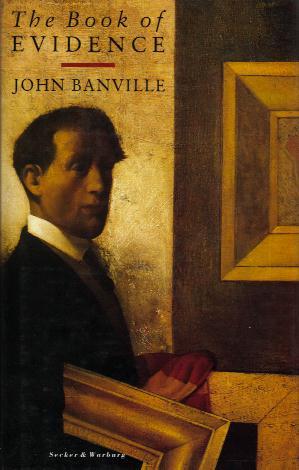
So there ya have it. The book I have next to me at the moment is John Banville's The Book of Evidence which was shortlisted for the Booker Prize in 1989. If you've seen the hilarious French faux-doc "Man Bites Dog", then you can get a good idea of what this novel is about and how it treats its main character, Freddie Montgomery, a man who kills because...well...he can. I wasn't too hot on this book when I started it, but it has really started to grow on me. Here Freddie is explaining the questioning process:

I am merely another name on a list. They are mild, soft-spoken, stolidly deferential, a little bored. I respond to their questions politely, with a certain irony, smiling, lifting an eyebrow -- It is, I tell myself smugly, the performance of my life, a masterpiece of dissembling.

Thanks for the tag Ali...and for the rest of you...tag you're it (okay that was too easy):

Troy Olson's Elusive as Robert Denby
Larry Linebaugh's To Infinity and Beyond
Kennettron 5000
Phillip Kelly's Phil-Zine
Mr. Holman's True Life: I'm a New Yorker?
Related Posts Plugin for WordPress, Blogger...