Your Ad Here
Showing posts with label Question of the Day. Show all posts

Friday, July 2, 2010

Question of the Day: Which is better, Canadian slashers or American slashers?


In the spirit of the holiday coming up ("USA, USA, USA"...I kid...) -- and the fact that even though I've been watching a TON of horror movies lately, but I just haven't had the time to write about them (for Jamie: you were so, so right about Slugs, hehe, it was wonderful) -- I was thinking of posing this question about which country had the better slasher resume.  So, horror fans, which do you prefer: the slashers of America (Halloween, The Texas Chainsaw Massacre, A Nightmare on Elm Street, The Burning, Friday the 13th, and Scream) or the slashers of Canada (Black Christmas, Prom Night, My Bloody Valentine, Happy Birthday to Me, Visiting Hours, and Terror Train)?  I think if we're talking the heyday of slashers (1978 - 81) it's pretty close, but when you start to look at when the slasher genre was getting to become overkill, the Canadians were still releasing semi-decent and innovative takes on the subgenre, so I think I prefer Canadian slashers films.

Which do you prefer?  Perhaps you're like me and you prefer a whole different kind of beast, the Italian giallo, which was the king of this subgenre pre-Halloween (and Argento and Soavi even added a few twists to it with their later, 1987 entries, Opera and Stagefright respectively).  Let me know your thoughts in the comments.  More horror reviews coming next week when work slows down a bit.

Friday, June 25, 2010

Question of the Day: What Makes a Good Horror Film?


Wow, I haven't done one of these in a long time. Since I've been thinking about horror films all summer (and will continue to do so) I was thinking about what makes a horror movie great.  So, what is it that makes a horror movie great for you?  Is it the comfortableness of the genre (i.e. the gore, the violence, the gratuitous nudity, teens in peril, etc.) that gives the viewer the kind of nostalgia that a lot of people opine about when they speak of horror films (specifically the slasher films of the 80's)?  Does it need to obey those rules or the tropes of the genre? Should it be sprinkled with humor, or have its tongue in its cheek? Does a good horror movie need atmosphere?  Does it successfully displace you and make you feel uneasy about what's going on?  Does it have to be realistic? For me there are a few examples of what I think make up a great horror movie (keep in mind I'm not saying these are the best horror movies, I'm just using them as examples):

Halloween: We'll start with the slasher film, and the obvious example at that, but it takes one of the primary hindrances for any horror movie (a limited budget) and creates one of the best looking horror films with its minimalistic and haunting score, and impressive use of the widescreen format.  Evil creeps up on you in the peripheries, and not only that, but John Carpenter places a lot of the initial stalking scenes in plain daylight in a seemingly safe suburban neighborhood.  Everything that screams normal and safe is inverted here, and it's all because of Carpenter's reliance on a classic mise-en-scene rather than ratchetiung up his film with false scares and buckets of blood.

The Beyond/City of the Living Dead: These two Italian horror films are the greatest, but they're perfect examples of what I like in a supernatural horror film. Characters come and go without any explanation, there is no sense of time or place, and the set pieces seem constructed out of Lucio Fulci's deranged nightmares.  Buildings are almost always abandoned, towns deserted, and people do inexplicably evil and nasty things thanks to ancient books being unearthed or curses caused by priests hanging themselves.  These two films are perfect examples of what it is to have an ethereal horror experience.  The plot's are nonsensical mishmashes of ideas, and the threads that connect them are razor thin; however, you don't watch Italian horror for its riveting story...it's all about atmosphere, and Fulci's films (I'll throw Argento's Suspiria and Pupi Avati's The House with Laughing Windows in there as well) are dripping with it.

The Descent: Here you have just enough realism (the opening spelunking scenes) that it gives me the willies just thinking about it (I'm claustrophobic); however, you also have a crazy-as-hell monster movie in its second half. Neil Marshall's brilliant horror film is a perfect example of how to do the monster movie right (have fun), while still maintaining an appropriate tone (something he couldn't do in his follow-up Doomsday) throughout the film.  You also have smart, strong female characters inahbiting this film, the "woman in peril" trope isn't as lame as it normally is because these women fight back, especially Juno, and they're give some time to create their charatcers so they don't just become props to be gnawed on by the crawlers.  Sarah, the main character, is given some heartbreaking context, and her past hovers over the entrie length of the film until we're treated to one a heartbreaking and poignant final shot...something you almost never get in a horror movie.  Marshall's film is also super referential, which makes for tons of geekout moments for nerdy horror fans such as myself.


There ya have it.  That's what I think makes a good horror movie: either play it classically the way Carpenter did, play is ethereal and nonsensical where it's all about atmosphere like Fulci did, or play it referential and have fun like Marshall. I'll be interested to hear what you all have to say.  Discuss in the comments. 

Monday, January 11, 2010

Question of the Day: What do you think of Phillips and Scott’s version of “At the Movies”?


Just a quick question today: I was watching their “Worst of the Year” special last night and I have to say it was nice to have critics on TV who weren’t afraid to after films like Departures, Watchmen, Transformers, and others…calling all of them some of the worst movie experiences of the year. Now I liked some of the movies they ripped on, but that’s what always made the Siskel & Ebert show so great, they weren’t afraid to rip on movies that people – including a lot of popular critics – loved. So it got me thinking: are we in store for another incarnation of Siskel & Ebert? It seems to me that after watching every episode of Phillips and Scott that they are starting to get more and more comfortable in their roles, and they’re also getting a little more prickly with each other (I loved when they were revealing their Top 10 of the Decade lists on a weekly basis and they both were ripping into each other’s choices), which is a good thing. I know nothing will ever be as good as Siskel & Ebert, but I do think that this new incarnation of the show is better than Ebert & Roeper, and of course it’s definitely better than the two Ben’s…which I would rather not think about. So I’m just curious if any of you have been watching, and if you have what are your thoughts on the duo?

Monday, January 4, 2010

Question of the Day: Your Favorite Films of 2007?


Today's question is about what many consider to be the best/deepest slate of films released this decade, and arguably the best/deepest since 1999.  Discuss and list your favorites in the comments.  Here's my list:

20.) 28 Weeks Later
19.) The Simpson's Movie
18.) Knocked Up
17.) Black Snake Moan
16.) The Lookout
15.) Grindhouse
14.) Juno
13.) Atonement
12.) The Darjeeling Limited
11.) Inland Empire


10.) Bug
9.) The Orphanage
8.) Gone Baby Gone
7.) Breach
6.) Into Great Silence
5.) Michael Clayton
4.) Eastern Promises
3.) There Will Be Blood
2.) No Country for Old Men
1.) Zodiac

Thursday, December 31, 2009

Question of the Day: Your Favorite FIlms of 2006?


Continuing with the theme of "best of" lists...so what movies stood out to you in 2006?  I'm noticing that this was a relatively weak year considering the years its sandwiched between.  Leave your lists in the comments...here's my list:

20.) Talladega Nights: The Legend of Ricky Bobby
19.) Why We Fight
18.) Jesus Camp
17.) Half Nelson
16.) Tristam Shandy: A Cock and Bull Story
15.) Stranger Than Fiction
14.) Looking for Comedy in the Muslim World
13.) The Departed
12.) United 93
11.) Perfume: A Story of Murder


10.) Bubble
9.) Flags of Our Fathers/Letters From Iwo Jima
8.) Casino Royale
7.) Thank You for Smoking
6.) Volver
5.) Marie Antoinette
4.) The Descent
3.) L'Enfant
2.) Miami Vice
1.) Pan's Labyrinth 

Tuesday, December 29, 2009

Question of the Day: Your Favorite Films of 2005?


Today's question continues my inquiry into what you all think are some of the best films of the decade.  Today we cover 2005, a year I had forgotten about.  There were a lot of great films released in 2005, and I think I forgot about it because of how great 2007 was, and how a lot of people think that year is the best of the decade, but 2005 gives it a run for its money.  Leave your lists in the comments.  Here's my list:

20.) The 40 Year-Old Virgin
19.) Kiss Kiss, Bang Bang
18.) In Her Shoes
17.) The Devil and Daniel Johnston
16.) Elizabethtown
15.) Grizzly Man
14.) Broken Flowers
13.) The Ice Harvest
12.) Cache
11.) The Proposition


10.) Lord of War
9.) The Constant Gardner
8.) Sin City
7.) Brokeback Mountain
6.) The Weather Man
5.) A History of Violence
4.) The New World
3.) Munich
2.) The Three Burials of Melquiades Estrada
1.) Syriana

Tuesday, December 22, 2009

Question of the Day: Your Favorite Films of 2004?


As we get closer and closer to the end of the year, and all of the inevitable end-of-the-year lists, I thought that I would re-institute the Question of the Day feature by asking everyone to list some of their favorite films for the years leading up to 2009.  I'm also doing this because Ric at Film for the Soul is on sabbatical from his wonderful Counting Down the Zeroes project and the subsequent top ten lists he asked contributors to submit.  So, I thought this would be a good venue to continue doing that.  Also, make sure to check out Tony Dayoub's blog Cinema Viewfinder as he's been rolling out his top 10 lists, showcasing the best films of the decade.  He just posted his list for 2002.  Check it out.  I've already listed my selections for 2000, 2001, 2002, and 2003...so that brings us to today's question: what are your favorite films of 2004?  My list comes after the jump...


20.) Anchorman: The Legend of Ron Burgandy
19.) Man on Fire
18.) The Alamo
17.) Baadasssss!
16.) Spider-Man 2
15.) Vera Drake
14.) The Life Aquatic
13.) Spanglish
12.) Ocean's Twelve
11.) Intimate Strangers


10.) I'll Sleep When I'm Dead
9.) Million Dollar Baby
8.) The Aviator
7.) I Heart Huckabees
6.) Eternal Sunshine of the Spotless Mind
5.) Spartan
4.) Sideways
3.) Collateral
2.) Kill Bill vol. 2
1.) Undertow

Monday, September 28, 2009

Question of the Day: What is the worst movie title you've come across?


Your question today comes courtesy of the awful looking Law Abiding Citizen (why didn’t they just call it Serial Killer Murders People While in Prison) starring Jaime Foxx and Gerard Butler. Here’s what I’m wondering: did the producers have so little faith in this movie that they just gave it the least sexy title they could think of. I can’t think of a title that is more blasé than this one. And the irony in the title isn’t lost on anyone (I can just picture the production meeting now: Exec #1 – “We’ll call it Law Abiding Citizen because there people being killed in the same manner this serial killer killed his victims, but he’s doing his time in jail, so the detectives are stumped. See…it’s ironic” Minions: “oooh that’s good!”). I swear I’ve seen that catchphrase (“how do you stop a killer who is already behind bars”) plastered on other movie posters. Ugh. Sorry…the question is this: what is the laziest (worst, most blasé, whatever adjective you want to use) title you’ve ever seen for a major release? B-grade movies don’t count because they are expected to be bad, especially in the horror genre, and they aren’t really expecting people to flood the theaters to their movie. Bonus question: what’s one of the best titles you’ve ever seen for a movie (Off the top of my head I love Synecdoche, New York…great title).

Monday, September 21, 2009

Question of the Day: Do your initial reactions towards a film change over time?


Our question today comes courtesy of Jason Bellamy from The Cooler fame. I don't really need to pimp the blog much because I am sure that all of you already visit Jason's superb site. Here's what Jason was curious about (it's a great question, too):

Generally speaking, are your first reactions to movies overly forgiving (too positive in retrospect) or overly critical (too negative in retrospect)?

My assumption is that the average (few times a year) moviegoer tends to like most things he/she goes to, in part because they only go to things they think they will like and want to like. But what about die-hard moviegoers, bloggers, critics? We see more movies, so that suggests we're harder to please. Then again, we love movies in general more than the person who only sees a few a year, right? So maybe we work harder to like things that, at first glance, don't seem like much. But the spirit of the question isn't 'Do you tend to like or dislike the majority of the films you see?' It's about that initial reaction. Over time, looking back at reviews or what you thought coming out of the theater, are you generally more forgiving of the film in question or do you find that you have a habit of overpraising films that two weeks later you don't even remember seeing? That's the question I'd be curious to hear some bloggers debate.


Great question, Jason. So...what do you all think? I'll save my thoughts for the comments.

Wednesday, September 16, 2009

Question of the Day: What are your favorite books about film?


My brother (who just wrote a really good write-up on Kubrick's Lolita) is leaving for vacation in a couple of weeks and needs some ideas for reading material. Out of my collection I recommended the authoritative Bergman text The Magic Lantern and Truffaut's The Films In My Life. So...I leave it up to you dear readers. What are some of your favorite books about film? I don't think my brother has a preference, so it could be film criticism; or a book about a certain film or filmmaker...just leave your recommendations in the comments section.

I'm at a work meeting most of the day so I will leave it up to Troy to respond in the comments section. I look forward to your answers. Some of my favorites are after the jump...


Monday, September 14, 2009

Question of the Day: Nicolas Cage -- Horrible actor, or good in the right role?


Pretty straight forward question today: what do you all think of Nicolas Cage? I personally think he deserves what he gets for things like The Wicker Man and Ghost Rider, but I also think he deserves to be recognized for how great he can be in the right role: Wild at Heart, Leaving Las Vegas, Adaptation, and The Weather Man just to name a few. What are some other good roles? Or do you think he's always bad? I've always found Cage to be a curious actor who makes curious decisions. I think it's safe to say there's a good actor buried under there, and even though he may be bad in certain roles...he's never uninteresting. One needs only to see The Wicker Man for proof.

I was thinking about this because of the new Herzog/Cage collaboration Bad Lieutenant: Port of Call New Orleans...the trailer is interesting to say the least. If you haven't seen it yet the trailer comes after the jump...


Click here to view video

Friday, September 4, 2009

Question of the Day: What are some of your favorite film endings?


I Haven't done one of these in awhile so I thought it would be a good way to head into the weekend. Oddly enough I was thinking about this question the other night when I popped in Superbad due to there being nothing on TV. I forgot how much I really liked this movie, but I don't think it's as good as I remember it being. In fact, Jonah Hill kind of gets on my nerves, and Michael Cera's act gets old pretty quick. However, it's still better than 90% of the comedies released today, and it has one of the most genuinely touching "rite of passage" endings I've seen in a film about teenagers. This got me thinking...what endings do I absolutely love (Superbad being one of them as that shot of them being pulled apart by the camera going down the escalator is truly moving)? A small list, with comments for a select few, follows the jump:


This leans more towards the modern because I did it off the top of my head. Sorry.


Superbad -- See above

City Lights


No Country For Old Men
-- There will be a lot of Coen Brothers movies on here. I just love the balls they had to end their film with such ambiguity. The final relaying of a dream by Sheriff Ed Tom Bell (Tommy Lee Jones) is the perfect coda to a perfect film.


8 ½
-- Fellini’s wonderfully entertaining take on the absurdity of life with his “what the hell…let’s enjoy it” philosophy providing the perfect ending: a total flip of Bergman’s dance of death. Fellini gathers figures from Guido’s (Marcello Mastroianni) past and present, circus performers, film critics, and an assortment of other types for a final scene of pure elation. Fellini’s dance of life, followed by a young Guido alone in a spotlight, is one of the most perfect endings I’ve ever seen in a film.


Magnolia
-- I love the final image of Melora Waters smiling into the camera as John C. Reilly tells her he’s not going to give up on her, all while Aimee Mann’s perfect music plays in the background… a perfect ending to a perfect movie. It warms me to no end whenever I see that ending.

Crimes and Misdemeanors

The Godfather

Raging Bull


Chinatown
-- Has such a nihilistic ending ever been so quoted or remembered? The perfect (and most necessary) ending to Roman Polanski’s stylish neo-noir.


Raising Arizona
-- Listening H.I. (Nicolas Cage) talk about how everything – despite the troubles of married life (and stealing a kid) – will be alright between he and his wife Ed (Holly Hunter). The glimpse into the future, accompanied by the great musical score, always gets me chocked up. And then in typical Coen fashion they end the touching scene with a joke (“or maybe it was Utah.”).


The Sweet Hereafter
-- The ending of this shattering film is chilling in how it puts the final, haunting stamp on already unnerving film experience. Sarah Polley’s narration, relaying the story of the Pied Piper is a perfect metaphor for what happens to her, and others, in the film. This is director Atom Egoyan’s masterpiece, and then ending provides the perfect closing to the film.

You Can Count on Me

Fargo


The Beyond
-- Lucio Fulci’s ethereal horror opus is far from the subtitles of some the other films mentioned on this list…but it has a kick ass ending, that’s for sure. When the main characters frantically make their way to a door (avoiding zombies along the way) thinking it will lead them to safety, and then realize they’ve entered hell…well it’s one of the best moments in Italian horror that elicits genuine uneasiness. Fabio Frizzi’s score certainly adds a little something special to that eerie ending.

Brokeback Mountain

A Nightmare on Elm Street


The Third Man
-- Of course this has to be on the list. Carol Reed’s ending to the seminal film noir is the perfect final moment as we think (read: audiences were conditioned to believe) the happy ending is on the horizon for Holly Martin (Joseph Cotton). However, his actions, as ethical as they may be, don’t land him the girl (there’s no way in hell this ending gets made in America) and as she walks by in that famous shot with that famous zither score in the background, all Holly can do is smile and smoke – all alone like the pulp cowboy characters he pens for a living. I would say that this specific shot – a static camera, a singular image walking towards the screen surrounded by trees on both sides, Holly off to the left waiting causally – is one of the five best shots in film history. It’s a perfect example of a director mastering mise-en-scene. Martin Scorsese would homage this scene in The Departed to a lesser effect.

Sideways

The Blair Witch Project


A History of Violence
-- After the dirty secret of his past has come out, small town everyman Tom Stall (Viggo Mortensen) is revealed to be somebody different than the person his wife (Maria Bello) married and is raising a family with. At the end of the film Tom and his wife stare at each other at the dinner table…an understood silence that tells us they both know, despite its difficulties, they must continue to live the lie. Cronenberg’s film is a masterpiece, and it’s one of the best endings he’s ever pulled off.

The Searchers

Planet of the Apes


The Shawshank Redemption
-- One of my favorite endings as we have Red’s (Morgan Freeman) wonderful narration guiding us through the final moments of the film (with the classic line “I hope…”) and a reunion on the Mexican coast that tugs at the heart strings. It’s funny to think that Darabont didn’t want the ending in the film (King didn’t have the ending in his short story), but the producers told him he was crazy, that people just sat through two-and-half hours of dark prison drama, and you cannot deprive them of that ending. Darabont acquiesced, and really, either decision would have been good. I’m glad he caved, though, because despite its schmaltz, it’s a perfect ending.

Tenebre

Carrie


Michael Clayton
-- The speech Michael (George Clooney) gives at the end is pretty awesome, but what I love about the end to Tony Gillroy’s call back to adult thrillers (and no I don’t mean the Animal Instincts kind of adult thriller) is that he just ends his film (credits and all) with a shot of Michael in a cab. It’s perfectly fitting that a film entitled Michael Clayton, a contemplative and quiet thriller, end with a subtle musical score and the camera just sitting on the character's face as he thinks about what he’s done and what his future holds…and the audience thinks with him. It’s a great, subdued ending that you usually don’t get in modern thrillers.

Don’t Look Now


Fail Safe

Citizen Kane


Traffic
-- Benicio Del Toro’s cop works, unknowingly, for a drug kingpin who he thinks is a good person wanting to bring down the cartels in Mexico – the truth is his new boss just wants to eliminate the competition. Del Toro’s cop decides to cut a deal with the American’s to bring down his boss as long as he gets baseball lights for the kids in Mexico so they can play baseball at night. It’s a great moment where Del Toro’s cop realizes that the war on drugs is unwinnable, but he’ll play along as long as it makes his city a better place to live. The final moments of the film, a static shot of Del Toro watching kids play baseball, is one of the best in modern years. Like the end of Michael Clayton, the ending of Traffic just allows us to watch this character (a stoic cop) enjoy the fruits of what he’s negotiated as a sense of freedom from the whole ordeal is clearly evident in his face; there’s even a brief moment where you swear a smile creeps across his face. Again, as is the case with most of these endings, the subtle music (a component of film that is far too overlooked) that accompanies the scene is perfect.

Soooo...what are some of your favorite all-time endings? Oh, and try not to use the word perfect as much as I do, hehe.

Tuesday, August 4, 2009

Question of the Day: Most Underrated Scorsese Picture?


After viewing the trailer for Scorsese's newest film Shutter Island, and not really knowing what to think about it (although I will of course fairly save judgment until I actually see the film, not three second of clips strung together) I started thinking about some of the great American director's most forgotten films. Some may disagree with me, many will probably agree, but I think the man is one of the five best American director's of all time, and his films almost always have a certain energy to them that make them infectious. Take a look at The Departed, certainly one of Scorsese's lesser films, but he he almost tricks you into thinking it's really good because of the sheer energy displayed in the filmmaking. More thoughts after the jump.

So, my question is what do you think is his most underrated film? I love his brilliant 1999 film Bringing Out the Dead, which certainly has to rank up there as one of the best collaborations between him and screenwriter Paul Schrader. It's about as perfect a film that Scorsese has made, touching on all of the deep themes and religious allegories that make the films he makes with Schrader so damn great. I think it definitely qualifies as Scorsese's most underrated film.

A case could also be made for the wonderful, and not much talked about, The Age of Innocence. A film that shows Scorsese's range, making a PG-rated Victorian romance with the usual Scorsese themes simmering beneath the surface. He also masks the camera and uses iris shots to great affect, giving the film its much needed antiquated feel.

I'm sure there are others out there that people will claim are underrated. I'm a fan of his misunderstood comedy The King of Comedy, and I certainly think that is a good candidate for Scorsese's most underrated film. Perhaps it's his more recent The Aviator (which I think is the best of his post Bringing Out the Dead era of films), or perhaps Kundun...

So let me know what you think. Extra question: What is Scorsese's most overrated picture? My answer is either The Departed or Gangs of New York.

Friday, July 24, 2009

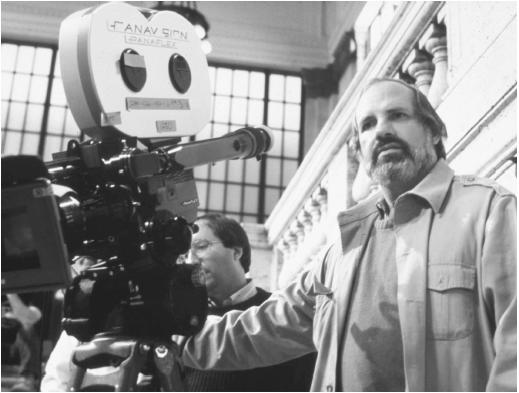
Question of the Day: Brian DePalma, innovative auteur or lazy aper?


I've always struggled with DePalma's films. I can probably count on one hand the films of his I really, really enjoy -- and the funny thing is I only enjoy them because I count myself lucky enough to understand his references. I've always wrestled with DePalma's place in the pantheon of filmmakers. On one hand I like that his allusions are for cinephiles, filmgoers who will feel like part of a special club for "getting" the reference. It's kind of like how I feel when I see a Judd Apatow film. Sure, the scene may be funny, but I know why it's funny. And so it is with DePalma...yes the scene is beautiful, but to fully enjoy it must you know why it's beautiful? Do you need to know where that scene came from and what films DePalma is constantly paying homage to? More thoughts after the jump...

And then there's the flip side to that coin...Ryan Kelly of the wonderful Medfly Quarantine and I had a brief discussion in one of his blog threads a while ago about the merit of DePalma. Sometimes I feel like he uses his famous line "the camera lies 24 frames a second" as a crutch, a means to just simply ripping off better directors than himself, and Ryan elequently defended the polarizing director. However, no matter how many valid opinions I hear from respected sources I think I will always wonder if DePalma has an original thought in his brain? But then I watch a film like Femme Fatale or Body Double and my mouth is agog at how brilliantly this guy can direct a scene.

It's a constant dilemma that I don't see being resolved anytime soon (at least in my own brain)...so then I leave it up to those of you smarter than I...is DePalma an original, an auteur; or is he just really good at taking other people's ideas and making them look good in his own way? (Obviously there's a middle ground in there somewhere, but I figured I would set up the two extremes to see which side people stand on.)

Wednesday, July 22, 2009

Question of the Day: How Do You Define Quality?


Yesterdays post got me thinking about Quality. Yes, "capital q" Quality. For those of you that don't know me, I enjoy my philosophy from time to time, and one of the best books I've been re-introduced to over the last year is Robert Pirsig's Zen and the Art of Motorcycle Maintenance. There is a section in that book (and really the whole book is a mediation on the Quality) that got me thinking about yesterdays question about assigning star ratings/grades to films. Troy mentioned in the comments yesterday that he liked the letter grade system, but the hardest part for him was deciding on a system where the grade or ranking meant something to him. More thoughts after the jump...

This is interesting because it gets me thinking about how each of us define quality, or as Pirsig refers to it: Quality. Allow me to take detour into the field of education for a moment: As a teacher (getting my masters in teaching right now, but I'm technically already a teacher) I seek to rid the classroom of rankings -- of invented letter grades and hierarchical structures that do nothing but make the students think that if they get an A, they must be "getting" the material. An "A" doesn't always prove that they are turning in quality work -- their work may not have any Quality at all -- it may just mean that they are fulfilling the requirements to get an A grade. Of course, a lot of this falls on the teacher and how they can get their students to think outside of grades and more in line with what they are learning instead of what they need to do in order to get the A.

Quality, and what it does or does not entail, is an interesting thing. In the passage I'm about to share with you Pirsig is talking about a teacher named Phaedrus who taught in the ancient hills that Pirsig and his son have just passed through on their motorcycle journey. He speaks of Phaedrus’ two distinctions of quality: the first being a more organic, creative phase that could not be defined. This was, to no surprise, the most fun and enjoyable idea of Quality because there was no rigid attempt at defining the term. The second idea of Quality is more due to rigid critical thinking, and because of this Phaedrus created a hierarchical listing of Quality. But I want to return to what Pirsig pontificates in the chapter prior to this…his musings on the topic of Quality are precisely the type of thinking that seems relevant to what some critics try to pin down as "quality films" with star ratings or letter grades. Pirsig writes:

Quality…you know what it is, yet you don’t know what it is. But that’s self-contradictory. But some things are better than others, that is, they have more quality. But when you try to say what the quality is, apart from the things that have it, it all goes poof! There’s nothing to talk about. But if you can’t say what Quality is, how do you know what it is, or how do you know that it even exists? If no one knows what it is, then for all practical purposes it really does exist. What else are the grades based on? Why else would people pay fortunes for some things and throw others in the trash pile? Obviously some things are better than others…but what’s the “betterness”?...So round and round you go, spinning mental wheels and nowhere finding anyplace to get traction. What the hell is Quality? What is it?


Well...what the hell is Quality? What elements help you identify what a Quality film is? When we watch a film how is that we know what we're watching is Quality?

Tuesday, July 21, 2009

Question of the Day: Assigning Films Stars/Grades, Good or Bad?


In lieu of movie reviews for the next month I am going to throw random crap at the wall and see what sticks in regards to piquing people's interest. I was thinking today about just how to review movies, and it got me thinking: I have never really put stars or grades at the end of my reviews, despite the fact that I inventory all of the films I see every year with a grading system, organizing each film on a spreadsheet in order of "A" films to "F" films. So, my question to you is this: Do you prefer reviews that ditch the rating system, or do you like it when critics assign a film stars or a grade?

Follow up questions: Do you find that you are more likely to skim reviews if you see stars or a grade at the top of the review, as opposed to say a film critic who doesn't adhere to any kind of ranking system, and just writes what they feel about the film? Is one way inherently better than the other? Do stars/grades have their place as a quick reference guide (I still have my little pocket book of four-star Ebert reviews that I used to take with me to the local video store)? Discuss...if you feel like it.
Related Posts Plugin for WordPress, Blogger...